
Online lie detector test in London
You can take a lie detector test in London over video, with no clinic visit and no travel across town. A certified examiner leads the session, with 12+ years of practice behind the method, and the method holds 95–98% accuracy.
Leave your details: we call you back, answer questions and agree the topics.
A lie detector test in London runs remotely on StimulTest technology, which reads involuntary physiological responses without attaching a single sensor and runs on any device with a camera. In the capital the format is mostly requested by companies with head offices here, law firms, tech teams and private clients dealing with relationship matters. Participation is voluntary and requires written consent. Average accuracy sits at 95–98%, the session lasts 60 to 150 minutes including the pre-test interview, and the written report is ready within 1–3 business days. The online format costs 205 USDT for any country; running the session in a foreign language adds 95 USDT.
Why an online lie detector test works in London

Camden, Croydon or a commuter town in Surrey: a stable connection and a camera are enough.

You skip the Tube at rush hour and the hour it eats on each side of an appointment.
The session happens in your own space, so there is no waiting area and no awkward run-in.
We follow recognised protocols and read reactions nobody controls at will.
No cuffs and no electrodes: the system works with the video and voice signal.
Every block gets its own verdict, so the report leaves nothing hanging.
The approach follows classic polygraph logic — watching how the body answers control stimuli — except that nothing touches the participant.

First the examiner records how the person responds when relaxed.
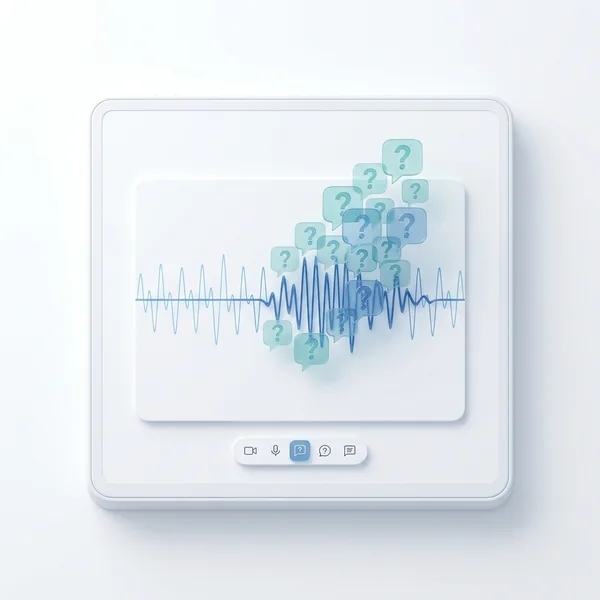
As the questions run, the software tracks every shift in the signal.

The algorithm then measures each answer against that baseline.

Finally the examiner interprets the charts and writes the conclusion.
Lie detector test services for London clients
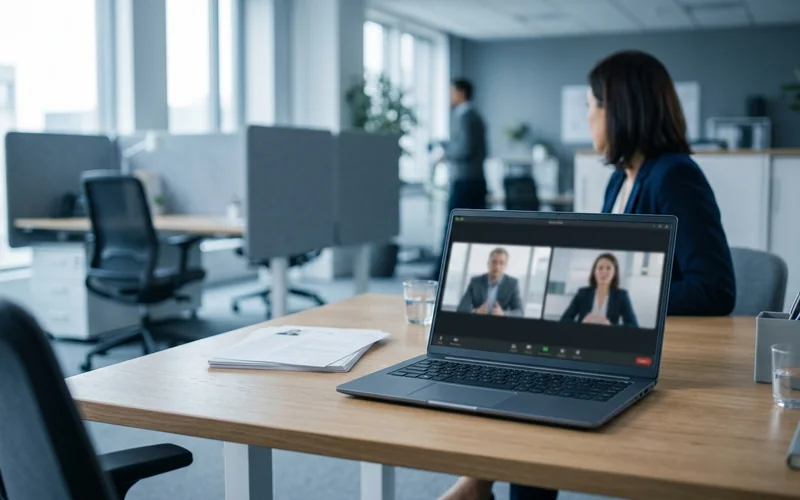
A guided video session with agreed topics and a verbal verdict at the end.
from 205 USDTLearn more →
Options for companies and for private clients, with timings and conditions.
from 205 USDTLearn more →
What goes into the question list, how long it runs and what the report covers.
Learn more →
Encrypted case file, restricted access and deletion on request.
Learn more →Online lie detector test in London: process, price and limits
London has no shortage of examiners, and that is exactly why the private market here is the most expensive in the country. A standard private test runs from about £350 to £595 for one person, and home visits or couples bookings push well above that.
There is a second cost nobody quotes: the city. Crossing London for an appointment and back swallows half a day. A remote lie detector test in London removes both problems at once, because the session starts wherever you already are.
Who books a lie detector test in London
Demand here is mostly corporate. Head offices, finance teams and firms handling client data come to us when information leaks, when stock disappears or when two accounts of the same event refuse to match. Management usually wants an answer fast and without an internal scandal.
Meanwhile, law firms form a second steady group, since they need to pressure-test a client’s version before building a defence around it. And then there are private clients: doubts inside a relationship, disputes over shared money, or the need to close an accusation nobody can prove.
How a lie detector test in London runs
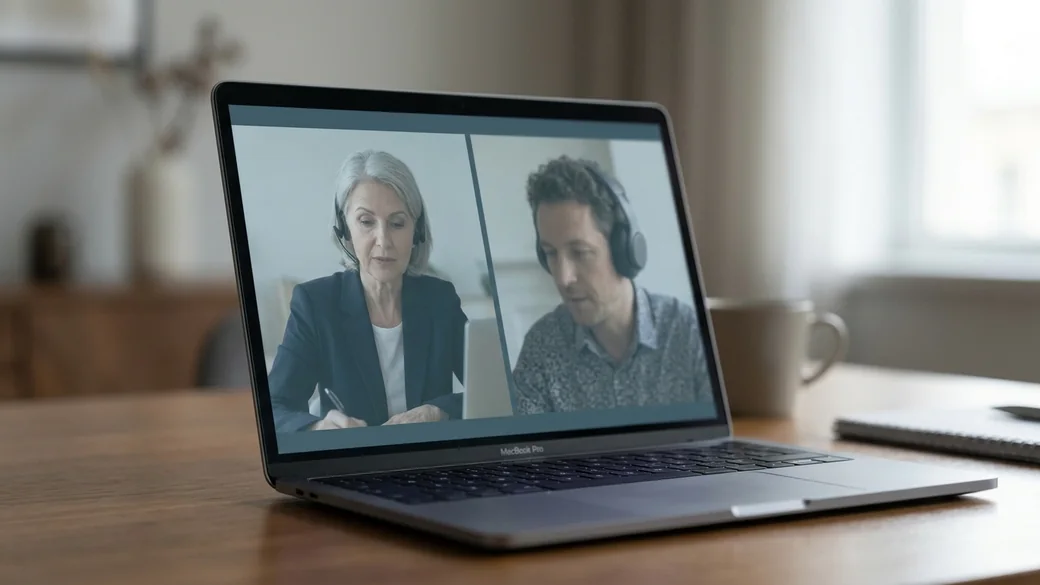
First of all, a free call where you describe the situation. If the facts can be turned into closed questions, the examiner drafts the topics and goes through them with you. Only then do we book a slot, early morning or after work if that suits better.
Then, on the day, you need three things: a stable connection, a camera and a space where nobody walks in. After that, the pre-test interview takes twenty to forty minutes, because every question is read aloud first.
What a polygraph costs in London compared with remote
UK providers quote roughly £350 to £500 for a standard single-subject test, and London sits at the top of that band. A home visit costs more again, a couples booking is normally a combined fee of roughly £680 to £895, and industry guidance puts the national average at £400 to £800.
A remote lie detector test in London costs 205 USDT, the same as anywhere, which includes the consultation, the question design, the session itself and the verbal conclusion. Held in a foreign language, the session adds 95 USDT, and the fee for a whole case — participants, urgency and format — is quoted free on the first call. Our breakdown of what a polygraph costs covers each item.
Corporate investigations in London: how we organise them

In an internal investigation the sequence matters as much as the technique. First we agree with management which specific episodes are under review, with dates and figures. Then the people involved are informed and we collect their written consent, always separately from any conversation about pay or contracts.
We spread appointments across different hours so nobody compares questions with the rest of the team. When it is over, the company receives a summary per participant and, on request, an extended report. We never hand raw recordings to third parties.
Relationship cases in London: what the test can settle
Couples usually write after months of the same argument going nowhere. The lie detector does not assign blame; it works with checkable facts — a specific meeting, a deleted message, a payment on a given date.
Feelings stay out of the question list, because they produce no readable physiological response. Put differently, the test clarifies what happened rather than what someone feels today. Even with that limit, a clear answer on the facts is usually what makes a decision possible.
How we write the questions for a London case
A usable question takes only yes or no, points at a single fact and carries no judgement. "Did you forward that client list to a personal email in March?" works. "Are you loyal to the company?" measures nothing at all.
During the pre-test interview we read the full list aloud, strip out double negatives and pin down the dates. Because of that, the participant knows exactly what is coming, which lowers tension and leaves a cleaner signal.
When we turn a London booking down
We decline some requests on the first call, and we say so plainly. That list covers minors without their guardians’ permission, people under the influence of substances, and anyone going through an acute crisis or a recent cardiac event.
We also turn down cases with no facts behind them. A question such as "will he do it again?" has no physiological answer. Reframe the matter as dated episodes, though, and it usually becomes testable.
Legal weight of the report for clients in London
Let us be direct: a polygraph result is not standalone evidence in court. In England and Wales the findings do not count as proof of guilt, and a judge weighs the whole case file rather than one document.
That does not make the report useless. It supports an internal company decision, helps a solicitor verify a client’s account before choosing a strategy, and closes a private doubt. Voluntary participation remains non-negotiable: without a signature there is no test.
What you receive after a lie detector test in London
The moment the call ends you hear the verbal conclusion block by block, including where the responses point to concealment. The fee covers that part and is usually enough for a private decision.
Meanwhile, the written document adds the methodology, the list of reviewed questions and conclusions with no double readings. Where a block returns contradictory data, we record it as such instead of forcing a comfortable answer.
Confidentiality for London clients
Anyone booking a lie detector test in London gets full discretion, because the enquiry itself is confidential. We do not contact family members, the participant’s employer or any third party.
Besides that, with corporate clients we put in writing who receives the result and in what form. If you would rather the files were deleted after delivery, we do that at no extra cost.
If the format still raises doubts, read how the test works without sensors, the review of online polygraph myths and the cases in which a test is actually needed.