
Online Lie Detector Test — Take a Real Polygraph From Anywhere
A professional online polygraph with StimulTest: no sensors, no travel — verified remotely by a certified examiner over video. Available worldwide, including Germany, the Netherlands, Ireland, the UK, Spain and Poland. 12+ years of practice, 95–98% method accuracy.
Free consultation
Leave your contact — we'll call back, answer your questions and choose the right format.
An online lie detector test (online polygraph) is a remote honesty check performed with StimulTest technology — without physical sensors, from any device, supervised by a certified examiner over a video call. It fits business needs (staff screening, internal investigations), private matters (infidelity, family and financial disputes) and government or security checks. The test is voluntary and requires written consent; the method's average accuracy is 95–98%, the core session lasts 60–150 minutes, and a written report is ready within 1–3 business days. The online format costs 205 USDT for any country. A free consultation is available: 0677309900, Telegram.
Why choose an online polygraph
From anywhere
Take the test from home, the office or another country — all you need is internet and a camera.
Fast
Booked at a convenient time; a verbal conclusion on the test day and a written report in 1–3 days.
Confidential
Only with written consent. The result goes to the client alone; your data is protected.
95–98% accuracy
A validated StimulTest methodology and a certified examiner on every session.
No sensors
No special hardware — reactions are analysed remotely, so anyone can take part.
Clear conclusion
A detailed report that explains the reactions — not a blunt verdict without reasoning.
The technology records and analyses a person's psychophysiological reactions to control stimuls — the same principle as a classic polygraph, but remotely. See how StimulTest works →
The examiner establishes each person's individual baseline of reactions.
Pre-agreed questions are asked — neutral and relevant ones.

The system and the examiner assess deviations from the baseline.
A final report is prepared with an explanation of the result.
Online polygraph services
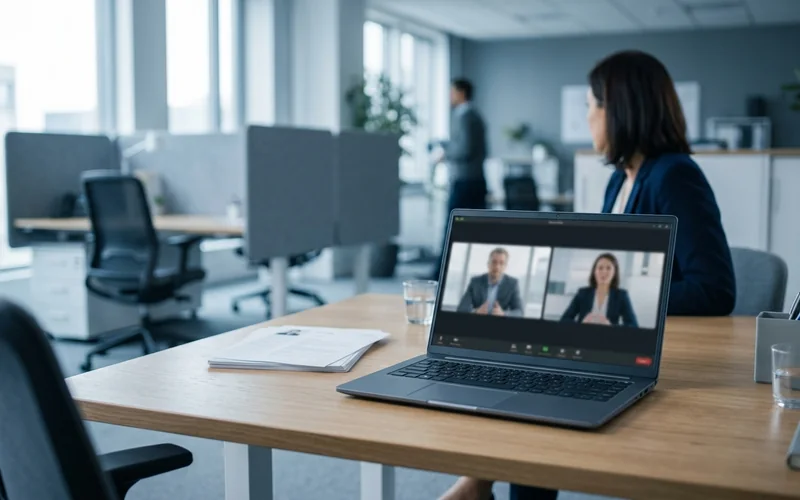
Staff screening, hiring checks, internal investigations.
from 205 USDTLearn more →
Infidelity, family and personal matters, protection from false accusations.
from 205 USDTLearn more →
Checks for departments and services, personnel vetting.
from 205 USDTLearn more →
Loyalty checks, partner due diligence, leak investigations.
from 205 USDTLearn more →Where we run online polygraph tests
Because StimulTest works over a video call, geography is not a limit — we run online lie detector tests worldwide. Clients most often come to us from:
Wherever you are, the process, price and methodology are the same — you don't need to find a local office or travel. browse the services block above
Online lie detector test: the complete guide
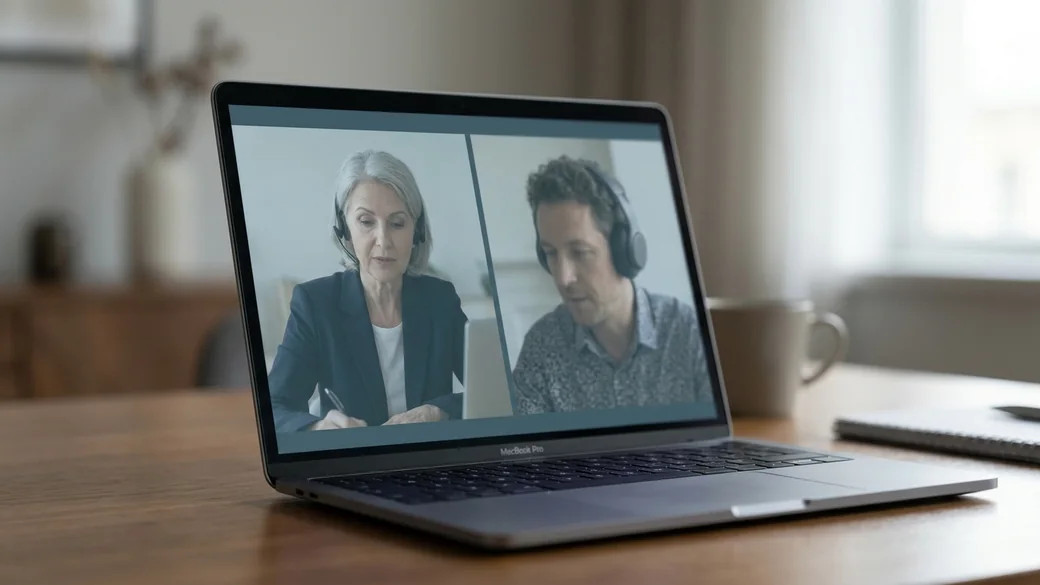
An online lie detector test — also called a remote or online polygraph — is a modern way to run a professional honesty check without visiting an office. For decades, taking a polygraph meant travelling to a specialist, being wired up to sensors and spending half a day on the procedure. StimulTest removes those barriers. The examination is conducted over a secure video call: a certified examiner guides the session, asks a set of pre-agreed questions and analyses the person's psychophysiological reactions in real time. All the participant needs is a stable internet connection, a camera and a quiet room. This makes an online lie detector test especially useful when the people involved are in different cities or countries, when speed matters, or when the matter is too sensitive for a face-to-face meeting.
It is important to draw a clear line from the very start. A professional online polygraph is not a game, a party app or a free "truth or lie" toy. Those novelty tools measure nothing real and produce random results. A genuine online lie detector test is a serious procedure performed by a trained examiner using a validated methodology, with a written conclusion at the end. Throughout this guide, "online lie detector test" always means the professional, examiner-led service — the kind that businesses, private clients and institutions actually rely on.
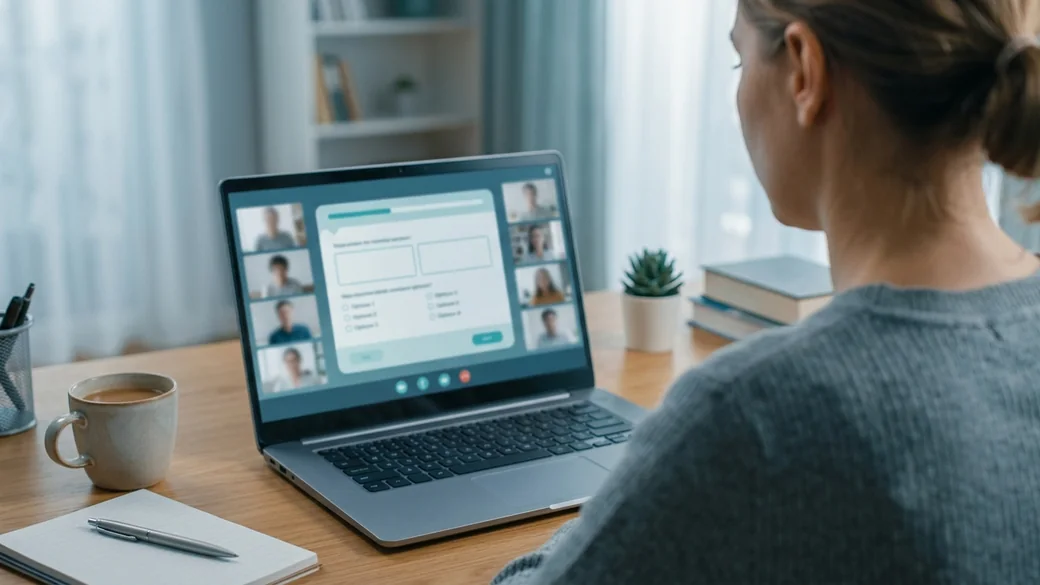
How an online polygraph differs from a classic one
The underlying principle is identical. Both a classic polygraph and an online lie detector record how a person's body reacts to control questions and compare those reactions with a personal baseline. The difference lies in how the reactions are captured. A classic instrument uses physical sensors for breathing, pulse and skin conductance, which is why it ties the person to a specific room and device. StimulTest analyses reactions remotely, without physical attachment, which is what makes a worldwide, from-anywhere format possible. When the methodology is applied correctly and the examiner is qualified, the reliability of a well-run online session stays in the same 95–98% range as an in-person test. In other words, "online" changes the logistics, not the science behind the method.
There are practical advantages beyond convenience. Because there is nothing to attach, an online session is less intimidating for the participant, which often leads to cleaner data. Groups located in different places — for example, a company's staff spread across several offices — can be tested within the same short window. And there is no travel cost or examiner travel time to pay for, so the online format is usually faster and more affordable than an on-site visit. It also scales gracefully: a business that needs to check three people in three countries no longer has to fly an examiner around or ask employees to take days off.
What the method actually measures
A lie itself cannot be seen, but the body's reaction to a significant question can. When a person is asked something they are trying to conceal, involuntary physiological changes tend to follow — subtle shifts that a person cannot fully control at will. A polygraph examination is built around detecting and comparing these reactions rather than "reading minds". The examiner first establishes a personal baseline with neutral questions, then observes how the reaction pattern changes on the relevant, agreed questions. Because the comparison is always against that individual's own baseline, the method adapts to calm and anxious people alike. This is also why the wording of each question is so important: a vague or double-barrelled question produces a noisy reaction that is hard to interpret, whereas a clear, single-idea question produces a clean signal. Professional examiners spend real time on question design precisely for this reason.
How the StimulTest method works, step by step
Every professional examination follows the same structure, and none of the questions are a surprise to the participant. First comes a request and a free consultation, where we discuss the situation and agree the exact list of questions. Then the session is scheduled at a convenient time. Before the test itself, the examiner runs a pre-test conversation: this explains the procedure, reduces anxiety and finalises the wording of every question. During the test, which lasts 60 to 150 minutes, the system records reactions to control questions while the examiner monitors the session. Finally, you receive a verbal conclusion on the same day and a detailed written report within one to three business days. Nothing about the process is hidden from the participant — transparency is part of what makes the results trustworthy.
How accurate is an online lie detector test?
Accuracy is the question everyone asks, and the honest answer is that it depends on three things: the examiner's qualification, how carefully the questions are worded, and the participant's state during the session. This is exactly why a pre-test conversation is never skipped, and why ambiguous outcomes — the so-called "grey zone" — are not passed off as a definitive answer. When a result falls into the grey zone, we say so plainly and recommend a re-test after a short interval, rather than forcing a convenient conclusion. Around a small percentage of sessions end this way, which is statistically expected for a properly conducted test. Anyone who claims a lie detector is "100% infallible" is overselling it; the realistic, evidence-based figure for a well-run examination is 95–98%.
Several factors influence the final reliability. An examiner experienced with your type of case will frame questions more precisely — for a business leak, for a relationship matter, for a due-diligence check. The participant's condition matters too: severe lack of sleep, acute stress, intoxication or certain medications can distort the physiological picture, so in case of doubt a session is rescheduled rather than pushed through. And the questions themselves must be clear, specific and free of provocation. A trustworthy provider will happily explain which protocol they are using and why, in a couple of plain sentences.
Is it legal and confidential?
A polygraph examination is lawful and is always carried out voluntarily, with the written consent of the person being examined. Nobody can be forced to take a test, and the questions — agreed in advance — cannot be offensive or provocative. Just as important, the whole process is confidential: information about the client, the circumstances and the outcome is not disclosed, the report is handed only to the person who commissioned it, and on request we sign a non-disclosure agreement before any work begins. It is also worth understanding the evidentiary status of the method: a polygraph conclusion is a strong decision-making tool for hiring, internal investigations and resolving disputes, but it is not an automatic court verdict. We always explain this status openly on the free consultation so that your expectations are correct from the outset.
Online lie detector test for business and HR
For companies, honesty is not an abstract value — it is money, reputation and safety. A single dishonest employee with access to cash, goods, client data or trade secrets can cost far more than any check. That is why pre-employment screening and internal investigations are among the most frequent business requests. During hiring, an online polygraph helps confirm that a candidate's account of their experience is truthful, that there are no hidden conflicts of interest, and that the reasons for leaving previous jobs are genuine. In an active investigation — a shortage, a leak, a suspicious pattern — a test of a small, relevant group can quickly narrow the circle and, just as importantly, clear the people who had nothing to do with it. Because the format is remote, an HR team can run a consistent screening standard across offices in different countries without anyone travelling, and results feed straight into a documented decision.
Online lie detector test for relationships
Questions of trust between partners are one of the most common private reasons people look for a lie detector online. Suspicion of infidelity, doubts after a difficult period, or the wish to finally close a painful question — these are situations where uncertainty itself becomes exhausting. A professional online test approaches such cases with particular care: the questions are agreed in advance, framed without humiliation, and the session is completely confidential, with the result shared only with the person who requested it. Handled properly, the outcome does more than confirm or dispel a suspicion — it lets a couple move forward from facts rather than endless assumptions. This is also the area where the difference between a real test and a free "relationship lie detector" game matters most: a serious decision should never rest on a random browser result.
Government and security use
Government departments, services and security teams use the method for personnel vetting, access control and official checks, where the cost of a wrong hire or a hidden risk is especially high. The same principles apply — voluntary consent, agreed questions, a documented conclusion — but the emphasis is on rigorous methodology and a report that stands up to internal scrutiny. For security-driven businesses, periodic loyalty checks and partner due diligence fall into the same category: verifying, before money or trust is handed over, that the person on the other side is who they claim to be.
Where we operate: worldwide and across Europe
Because the examination runs over video, there is no geographical limit to where we can work. We regularly test clients in the United Kingdom, Germany, Ireland, the Netherlands, Spain, Poland and Ukraine, as well as many other countries around the world. In each of these markets the demand is similar — hiring checks, internal investigations, relationship matters and due diligence — while the delivery is identical: the examiner comes to you through the screen. There is no need to find a local polygraph office or travel to another city. The methodology, the timing and the price are the same no matter where you are based, and sessions can be arranged in a language that is comfortable for the participant. For international teams this is a decisive advantage — colleagues in different countries can be checked within the same project, on the same standard, without anyone leaving their desk. Wherever local rules place limits on how a polygraph result may be used, we explain them honestly during the consultation, so the check always fits your real needs.
How much it costs and how long it takes
The online StimulTest format costs 205 USDT regardless of country; a test conducted in a foreign language carries an additional 95 USDT. The exact price for a specific task — the number of participants, urgency and format — is quoted for free on the first consultation, before any work starts. The core part of the examination lasts from 60 to 150 minutes together with the pre-test conversation. You receive a verbal conclusion on the day of the test, and a full written report within one to three business days. Compared with an on-site visit, the online format is usually both cheaper and quicker, because there are no travel costs and no examiner travel time to account for. For group checks, a per-person rate and a clear schedule are agreed up front, so there are no surprises on the final invoice.
"Free online lie detector" versus a real test
If you search for a lie detector online, most of the results are free browser games, "voice" or "fingerprint" apps and prank tools. They are entertaining, but they detect nothing — the outcome is essentially random and has no evidential or practical value. A real online lie detector test is the opposite: a supervised, methodical procedure with a qualified examiner, agreed questions and a documented conclusion. If your goal is genuine clarity — for a hiring decision, an investigation or a personal matter — a novelty app cannot help, and relying on one can do real harm, whether that means firing the wrong person or accusing an innocent partner. That is the difference we want every visitor to understand before they choose.
How to choose a provider: a short checklist
- A certified examiner with a real professional background, not a weekend online course.
- A clear methodology the examiner can explain in a couple of plain sentences, including how the grey zone is handled.
- Agreed questions in advance — you should always know what will be asked before the session.
- A proper written report of several pages with the reasoning, not a one-line "verdict".
- Transparent pricing fixed before the work starts, with group rates stated up front.
- Genuine confidentiality — an NDA on request and results shared only with the client.
How to prepare and what to expect
Good preparation reduces the risk of false interpretation and makes the procedure more comfortable. In the 24 hours before the test, avoid sedatives, alcohol and energy drinks, and let us know in advance about any heart or blood-pressure medication. A couple of hours before, have a light meal, no more than one cup of coffee and enough water. On the day, join at the agreed time from a quiet, well-lit room. Prepare an identity document if requested, and remember that every question has been agreed in advance — there will be no surprises in the wording. The one thing not to do is attempt "countermeasures" such as controlled breathing, muscle tension or mental counting: modern methodology registers these as artefacts and they only worsen the result. The most reliable strategy is simply to stay calm and answer the agreed questions honestly.
Common myths about the online polygraph
"Online can't be as accurate as in person." The science is the same; what changes is how reactions are captured. A well-run remote session holds the same 95–98% range. "You can easily trick it." Deliberate countermeasures are recognised as artefacts and backfire. "It's just a fun app." Free tools are toys; a real test is an examiner-led procedure with a written conclusion. "A polygraph is a court verdict." It is a powerful decision-making tool, not an automatic legal proof, and we always say so plainly.
Which questions can and cannot be asked
A common worry before a first test is what exactly the examiner will ask. The answer is simple: only the questions agreed with you in advance, and nothing that is offensive, degrading or unrelated to the matter at hand. Good questions are specific and cover a single idea — "did you take the missing cash from the register on the 3rd" is answerable; "have you ever done anything dishonest" is not. Questions about political or religious beliefs, or anything designed to humiliate, have no place in a professional examination. If a provider proposes vague, sweeping or provocative wording, that is a warning sign. During the pre-test conversation we finalise the list together, so there are no surprises and every reaction can be interpreted cleanly.
Online polygraph versus voice and "AI" lie detectors
Alongside free games, the internet is full of "voice stress" and "AI" lie detectors that promise to spot deception from a recording or a webcam alone, with no examiner involved. It is worth being sceptical. Voice-stress analysis has repeatedly failed independent testing, and a fully automated "AI verdict" with no trained human in the loop is not a recognised method. A professional online polygraph is different in a fundamental way: a certified examiner designs the questions, establishes a personal baseline, watches the session live and interprets the result in context. The technology assists the examiner; it does not replace them. That human expertise is precisely what separates a dependable conclusion from a gimmick.
What happens after the test
Once the session ends, the examiner processes the data and gives you a preliminary verbal conclusion the same day, followed by a written report within one to three business days. The report is not a bare "pass/fail": it describes the methodology used, the questions asked and the reasoning behind the conclusion, so that it can support a real decision. How you use it is up to you — to make a hiring call, to close an internal investigation, to resolve a personal question, or simply to gain peace of mind. Because the result is confidential, it is shared only with you; nothing is published or passed to third parties without your written consent.
Booking your online test
Getting started takes minutes. Leave your name and a contact in the form on this page, or reach us directly by phone or Telegram, and we will arrange a free consultation. On that call we clarify your situation, agree the questions, choose the format — an individual session or a group check — and confirm the price and timing. There is no obligation at the consultation stage: many people simply want to understand whether an online lie detector test is the right tool for their case, and we will tell you honestly if it is not. When you are ready, we schedule the session at a time that suits you, anywhere in the world.
Common situations we handle
- Pre-employment screening — verifying honesty and hidden conflicts of interest before a candidate joins.
- Internal investigations — shortages, leaks of data or intellectual property, misuse of access.
- Relationship and family matters — infidelity concerns and personal disputes, handled with full confidentiality.
- Partner due diligence — checking the honesty of a partner or manager before entrusting money or a project.
- Clearing false accusations — an initiative test to confirm your version before employers or family.
Whatever your situation, the best first step is a short, free consultation. We will discuss the specifics, suggest the right format and quote a final price with no hidden extras. Real examples and answers to popular questions are collected in the blog and questions sections linked below.
Setting up a clean technical session
A remote examination is only as good as the picture and sound the examiner receives, so a few minutes of setup pay off. Choose a small, quiet room where you will not be interrupted, and switch your phone to silent or leave it in another room. Sit facing a soft, even light — a window in front of you or a lamp beside the screen — rather than with a bright light behind you, which throws your face into shadow. Position the camera at roughly eye level and far enough back that your face and shoulders are in frame; the examiner needs a steady, natural view, not a close-up. A wired connection or a strong Wi-Fi signal is worth the effort, because a frozen or stuttering feed interrupts the flow of questions. Close other apps and browser tabs so nothing pops up mid-session, and if you use headphones, choose comfortable ones you can forget about. None of this requires special equipment — a modern laptop or phone is enough — but a calm, well-lit, stable setup lets the method work at its best.
Where the online polygraph is used, by industry
Different sectors bring the same core need — trust — to very different situations. In retail and hospitality, the frequent questions concern till shortages, inventory shrinkage and unrecorded discounts, where a quick check of a small team can settle a matter without souring the whole floor. In finance and accounting, the focus shifts to conflicts of interest, undisclosed side dealings and the handling of confidential client information, where a single lapse carries outsized cost. In logistics and warehousing, tests often centre on missing goods, fuel and cargo, and collusion with outside parties along a delivery chain. In IT and technology, the sensitive ground is source code, customer databases and access credentials, and checks tend to accompany roles that touch critical systems. Manufacturing, security services and professional agencies each have their own version of these concerns. The methodology does not change from one industry to the next; what changes is the wording of the questions, which is shaped around the real risks of the role. That is why the pre-test conversation always starts from your specific context rather than a generic template.
Cross-border and remote hiring
Distributed teams have made verification harder just as it has become more important. When a candidate is hired sight unseen in another country, an employer often has little more than a CV, a video call and a set of references that are difficult to check. An online examination adds an independent layer to that picture: it can confirm that stated experience is genuine, that there are no hidden obligations to a competitor, and that the reasons for leaving earlier roles are as described. Because the session runs over video, it fits naturally into a remote hiring pipeline — there is no need to fly anyone anywhere or wait for a local provider in the candidate's city. Sessions can be scheduled across time zones at an hour that suits both sides, and a company can apply exactly the same standard to every finalist, wherever they live. For teams that hire continuously across borders, this consistency is often as valuable as any single result.
What the written report contains and how to read it
The written report is the lasting product of the examination, and it is built to be read by someone who was not in the room. It sets out the purpose of the test, the list of questions exactly as they were agreed and asked, and the methodology applied, before stating the conclusion for each relevant question. Crucially, it explains the reasoning: how the reactions on the significant questions compared with the person's own baseline, and why that pattern points to the stated result. Where an answer falls into the grey zone, the report says so honestly rather than forcing a clean verdict. Read it as a structured argument, not a single word — the value lies in the link between the questions, the reactions and the conclusion. Kept on file, it becomes part of a documented decision that can be revisited later, which is exactly why a real report runs to several pages while a novelty app offers nothing you could ever show to anyone.
Ethics and informed consent in depth
Consent is not a box ticked at the start; it runs through the whole examination. Before anything begins, the participant learns what the test involves, sees the exact questions, and agrees to them in writing, freely and without pressure. Because participation is voluntary, a person may decline or stop at any point, and a refusal is not treated as proof of anything. The questions themselves stay within strict limits: they address the matter at hand and nothing else, and they are never framed to humiliate or to probe private beliefs. The examiner's duty is to the accuracy and fairness of the process, which means reporting a grey-zone result as uncertain rather than convenient, and never overstating what the method can prove. Handled this way, an online polygraph respects the dignity of the person taking it — and that respect is part of what makes the outcome credible to everyone who later relies on it.
Protecting your data and privacy
Because a session captures sensitive information, how that information is handled matters as much as the result itself. The examination is confidential from end to end: details of the client, the circumstances and the conclusion are not disclosed to third parties, and the finished report is delivered only to the person who commissioned the test. Where a case calls for it, a non-disclosure agreement can be signed before any work begins. Nothing about the outcome is published or shared without your written permission. Just as importantly, the private nature of a remote session means the check can be arranged discreetly, without colleagues, family or outsiders needing to know it is happening. If you have specific requirements about how records should be handled or stored, raise them on the consultation so that everything is agreed clearly in advance.
When an online polygraph is not the right tool
An honest provider will also tell you when the method does not fit. A polygraph measures reactions to specific, answerable questions about facts — it cannot settle matters of opinion, predict future behaviour, or diagnose a medical or psychological condition. It works poorly when there is nothing concrete to ask about, or when the real disagreement is about interpretation rather than events. Certain conditions on the day — severe illness, acute intoxication, extreme exhaustion or particular medications — can distort the physiological picture, in which case the responsible step is to reschedule rather than test regardless. And while a conclusion is a strong aid to a decision, it is not an automatic legal verdict, so it should support a judgement, not replace one. If your situation falls outside what the method can reliably address, we will say so at the consultation and, where we can, suggest a more suitable next step.
Learn more about the online polygraph: StimulTest home, all services, blog, questions and about our team. For business, individuals and government — choose your format in the services block above.