The desire to know the truth is one of humanity's oldest needs. Thousands of years ago, priests, judges and rulers were already searching for a reliable way to tell a lie from the truth. And although the methods changed — from sacred rituals to sophisticated electronic instruments — the goal stayed the same: to build a lie detector that could be trusted. This article is a fascinating journey through the ages, and the history of the lie detector takes us from ancient civilizations all the way to modern AI-powered verification technologies.
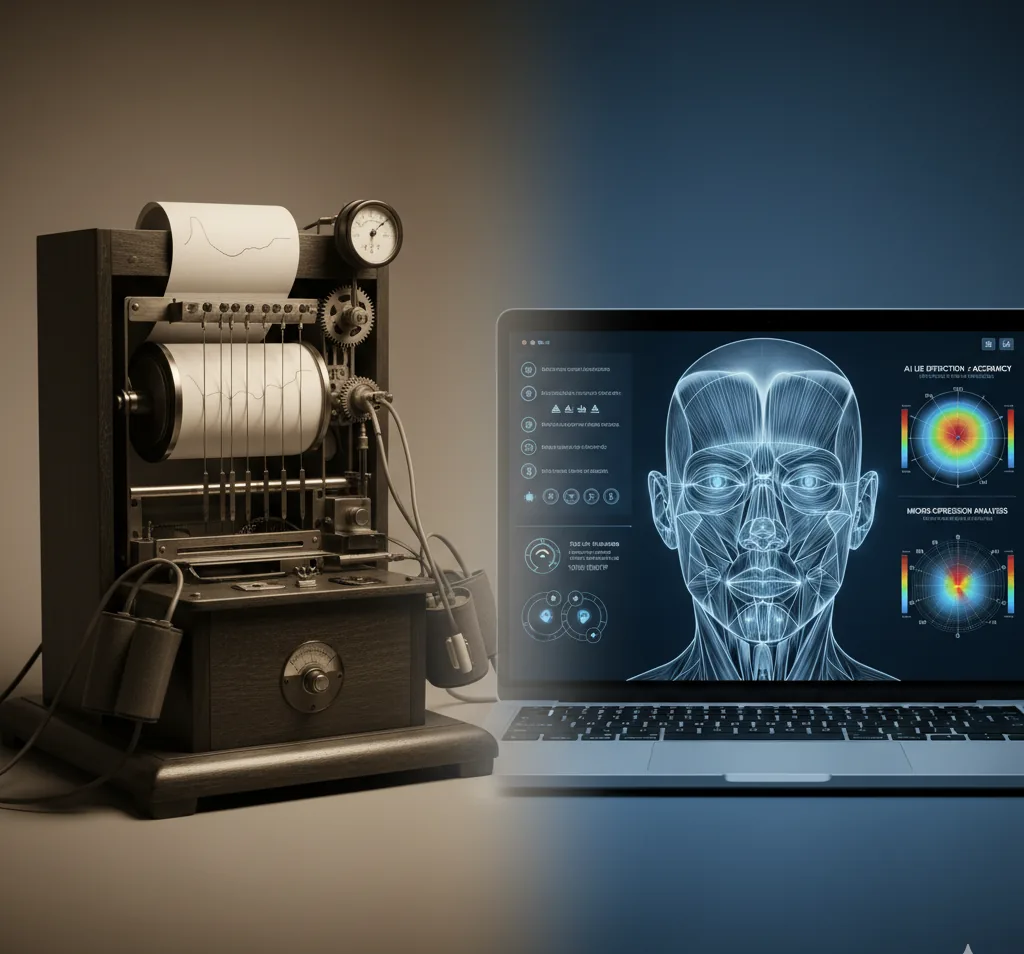
Interesting fact: People have been trying to create a reliable method of detecting lies for at least 3,000 years. From the rice test in Ancient China to machine-learning algorithms, every era added its own chapter to this incredible story.
Let's trace that evolution step by step: from primitive rituals built on fear and superstition, to scientific instruments that measured physiology, and onward to advanced systems that analyze the subconscious reactions of the brain with artificial intelligence. This story isn't just interesting — it helps explain why the modern online polygraph technology behind StimulTest is the natural result of a centuries-long search for truth.
Ancient Methods of Detecting Lies: When Science Did Not Yet Exist
The Rice Test in Ancient China
One of the oldest documented methods of detecting deception comes from Ancient China, around 1000 BC. A suspect was given a handful of dry rice to hold in his mouth during questioning. Once the questioning was over, the rice was removed and examined: if the grains stayed dry and stuck together, the person was judged to be a liar.
Oddly enough, there is a rational kernel to this method that modern science can explain. When a person is under intense stress — for example, afraid of being caught in a lie — his sympathetic nervous system is activated. One consequence is reduced salivation: the mouth goes dry. So a liar's rice really could stay dry, whereas a calm, honest person produced enough saliva to moisten the grains.
Of course, this method was far from perfect. An innocent person who feared an unjust punishment could also have a dry mouth from fright. But the principle itself — using a physiological reaction to stress as an indicator of deception — became the foundation for every later development in the field of lie detection.
The Sacred Donkey in India and the "Hot Knife" in Africa
Ancient India had a no less inventive method. Suspects were led into a dark room where a donkey stood with its tail smeared in soot. Each person was told: "Pull the donkey's tail — if you are innocent, the donkey will bray. If you are guilty, it will stay silent." The logic was simple: a guilty person, afraid of being exposed, would not actually pull the tail, so his hands stayed clean. An innocent person pulled confidently — and his palms came away black with soot.
This method effectively measured a behavioral reaction to fear — the urge to avoid a situation that might expose a lie. Some African tribes used the hot-knife method: the suspect had to lick a red-hot blade. It was believed that a liar's tongue would burn while an honest person's would not. Again, the physiological explanation involves salivation: enough saliva creates a brief vapor-insulating layer that protects against a burn.
Note: All of these ancient methods shared one trait — they relied on the physiological signs of stress: changes in salivation, sweating and behavioral reactions. It is exactly this principle that, thousands of years later, became the basis of the classic polygraph.
Antiquity and the Middle Ages: From Hippocrates to Ordeals
The ancient Greek physician Hippocrates (460–370 BC) described the link between a person's emotional state and physiological changes: flushing of the face, trembling hands, changes in the voice. He effectively laid the foundations of psychophysiology — the science on which all of polygraphy would later be based.
Medieval Europe was dominated by ordeals — "trials by God," in which a suspect was subjected to a test by fire or water. If the wounds healed quickly, the person was acquitted. These methods had no scientific basis and rested purely on superstition, yet they testified to society's unquenchable drive to find an objective way to establish the truth.
Cesare Lombroso: The Birth of a Scientific Approach (1895)
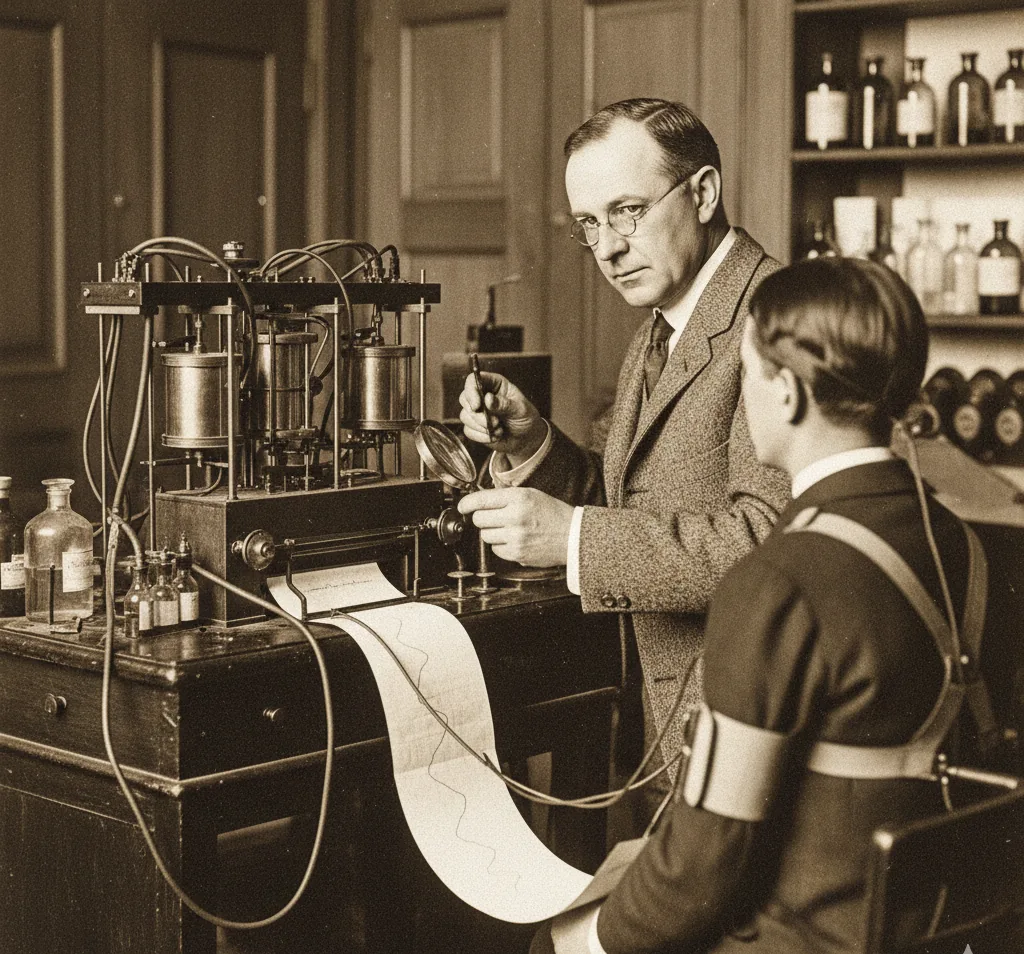
The real turning point in the history of the lie detector came at the end of the 19th century, when the Italian criminologist and physician Cesare Lombroso took a revolutionary step — he tried to replace rituals and superstition with instruments. In 1895, he applied a device called the hydrosphygmograph to measure changes in the blood pressure and pulse of suspects during interrogations.
Lombroso was convinced that criminality had a biological basis and that physiological reactions could point to a lie. His hydrosphygmograph measured the volume of blood in the vessels of a suspect's arm and recorded changes in the pulse wave. When a person grew agitated, the device registered fluctuations in pressure and heart rate.
One of the most famous applications of the hydrosphygmograph was a murder case in Turin. Lombroso examined a suspect and recorded a significant rise in pressure when specific details of the crime were mentioned. This helped steer the investigation in the right direction, although the instrument's readings did not become legal evidence in their own right.
Despite the method's limitations, Lombroso's contribution is undeniable: he was the first to show that the body's physiological reactions can be measured objectively and used to assess truthfulness. It was his work that inspired the next generation of researchers to build a full-fledged polygraph.
William Marston: The Psychology of Lying and… Wonder Woman (1915)
The Systolic Blood Pressure Test
In 1915, the American psychologist William Moulton Marston developed a systolic blood pressure test for detecting deception. Working at Harvard University, he discovered that systolic pressure rises significantly when a person deliberately lies. Unlike Lombroso, Marston ran controlled scientific experiments with a clear methodology.
Marston claimed his method was accurate up to 97% — a figure later disputed by other researchers. Even so, his work had an enormous influence on the development of polygraphy. He was the first to propose a systematic interrogation protocol with control and relevant questions — a principle that has survived in polygraphy to this day.
From Lie Detector to Comic Books
But the most fascinating part of Marston's biography is that he became the creator of one of the 20th century's most famous superheroes. In 1941, under the pen name Charles Moulton, he created the character Wonder Woman for DC Comics. And that is no mere coincidence: Wonder Woman wielded the famous Lasso of Truth — a magical artifact that forced anyone to tell the truth.
The Lasso of Truth was a direct metaphor for the polygraph — the technology to which Marston devoted a substantial part of his scientific life. He dreamed of a world in which lying would become impossible, and he embodied that dream in both science and art. Interesting fact: Marston's wife, Elizabeth Holloway, also contributed to the development of the systolic pressure test, and she is believed to have inspired the character of Wonder Woman.
Historical note: In 1923, the court in Frye v. United States rejected the results of Marston's test as evidence, establishing the "Frye standard" — the criterion for admitting scientific evidence in court. This precedent shaped the complicated relationship between the polygraph and the justice system for decades.
John Larson: The Birth of the True Polygraph (1921)
If Marston laid the theoretical foundation, then John Augustus Larson built the first full-fledged device that can be called a polygraph in the modern sense of the word. In 1921, working at the Berkeley Police Department (California) under the innovative police chief August Vollmer, Larson created a device that simultaneously recorded three physiological parameters:
- Blood pressure — changes in blood pressure during the interrogation.
- Pulse rate — acceleration or slowing of the heartbeat.
- Respiration rate — changes in the rhythm and depth of breathing.
It was Larson who named his device the "polygraph" — from the Greek words "polys" (many) and "grapho" (I write), that is, "writing many [parameters]." The instrument continuously recorded readings on a moving paper strip, producing a characteristic chart with several curves.
Larson conducted more than a hundred studies in real criminal cases. One of the most famous was solving a series of thefts in a University of California dormitory in 1921. Using his device, Larson examined dozens of suspects and managed to narrow the field down to a specific individual, who later confessed. This case drew enormous press attention and turned the polygraph into a sensation.
Larson himself, however, later grew disillusioned with his invention. He believed the polygraph should be used solely as a supplementary research tool alongside professional interrogation, not as a standalone "lie detector." He even called the mass commercial use of the polygraph a "Frankenstein's monster" — that is how much the abuse of the technology troubled him.
Leonarde Keeler: The Polygraph Becomes Portable (1930s)
Keeler's Portable Polygraph
Larson's student, Leonarde Keeler, went further than his mentor and made the polygraph a practical instrument. In the 1930s, he built a portable polygraph that could be carried and used outside the laboratory. Keeler added a fourth channel to the device — the galvanic skin response (GSR), that is, a measurement of the skin's electrical conductivity, which changes with sweating.
This was a fundamentally important addition. Skin conductivity turned out to be one of the most sensitive indicators of emotional arousal: even the slightest stress causes microscopic sweating at the fingertips, which a person does not feel but the device registers. To this day, this parameter is considered one of the most reliable in classic polygraphy.
Commercialization and Mass Adoption
Keeler did not merely improve the device — he turned it into a business. In 1938, he founded the Keeler Polygraph Institute, which became the first training institution for polygraph examiners. Keeler standardized the testing procedure, created training programs and began mass-producing the instruments.
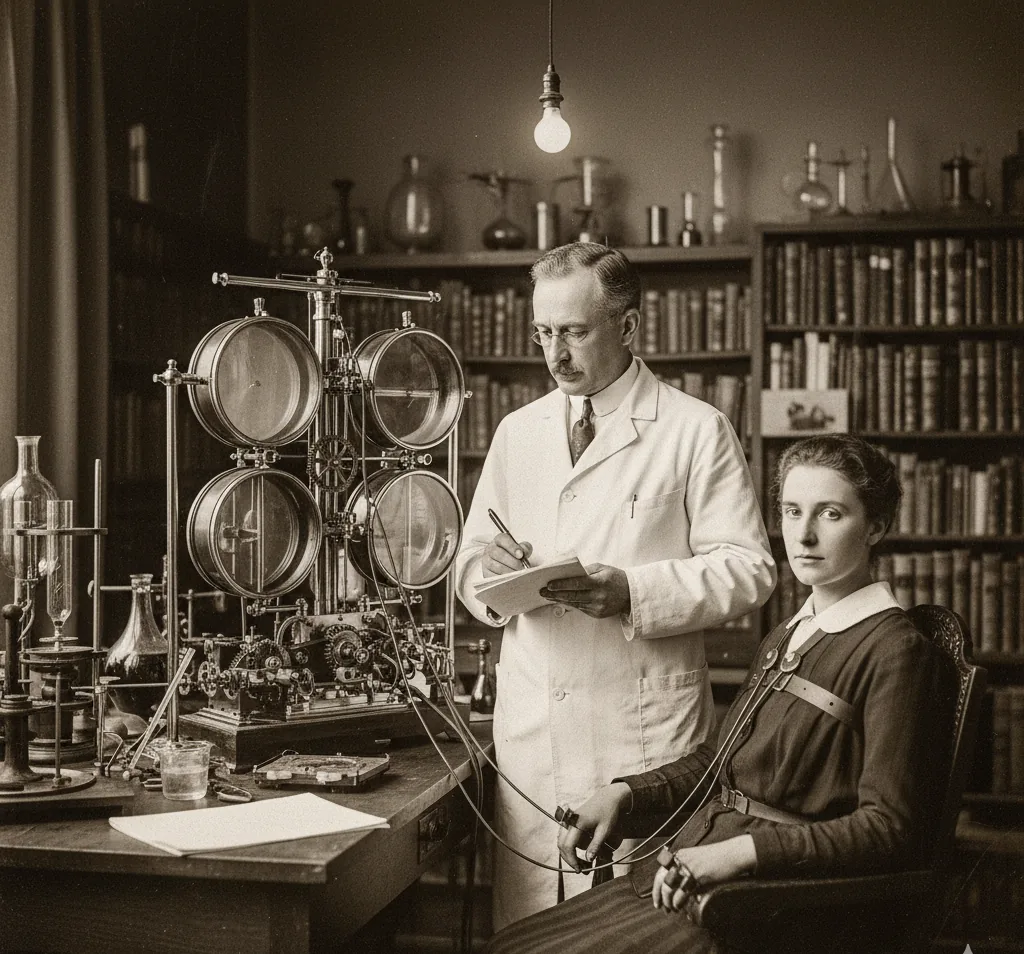
It was thanks to Keeler that the polygraph entered the everyday practice of U.S. law enforcement. By the end of the 1940s, the polygraph was being used by the police, the FBI, military intelligence and the private sector. The "Keeler" brand became synonymous with the polygraph, and Keeler himself became the most famous polygraph examiner of his time.
Mass adoption, however, had a darker side. The number of poorly qualified operators grew, and they interpreted results subjectively. Without a clear scientific methodology, the accuracy of tests varied wildly — from brilliant results in the hands of masters to catastrophic errors in the hands of amateurs.
The Development of Interrogation Techniques: CQT, GKT and the Scientific Basis
The Control Question Technique (CQT)
In 1947, the American polygraph examiner John Reid proposed the Control Question Technique (CQT), which became one of the most widespread methods of conducting polygraph tests in the world. The essence of the method lies in comparing physiological reactions to two types of questions:
- Relevant questions — directly concerning the case under investigation (for example, "Did you steal the money from the cash register?").
- Control questions — concerning general ethical transgressions of which most people are "guilty" (for example, "Have you ever lied to people you trust?").
The logic is this: an innocent person is more worried by the control questions (because they prick his conscience), whereas a guilty person is more worried by the relevant ones (because they concern the specific crime). By comparing the intensity of the reactions, the examiner draws a conclusion about truthfulness.
The Guilty Knowledge Test (GKT)
An alternative approach was proposed by the Israeli psychologist David Lykken in 1959. His Guilty Knowledge Test (GKT), also known as the Concealed Information Test (CIT), rested on a fundamentally different logic. Instead of "Did you do it?" questions, it used questions that only a guilty person could answer.
For example, if a specific object had been stolen, the suspect was shown several objects and observed to see which one produced the strongest reaction. An innocent person reacts the same way to all of them — to him they are equivalent. A guilty person involuntarily reacts more strongly to the one connected with the crime, because the brain recognizes familiar information.
Worth knowing: It is precisely the GKT/CIT principle — the brain recognizing concealed information — that became the conceptual basis for modern cognitive verification technologies, in particular StimulTest. The difference is that StimulTest measures not the body's physiology but the brain's reaction directly.
Scientific Criticism and Debate
The development of these techniques was accompanied by heated scientific debate. In 1988, the U.S. Congress passed the Employee Polygraph Protection Act (EPPA), which banned mandatory polygraph testing in the private sector. In 2003, the U.S. National Academy of Sciences published a large-scale study that acknowledged the polygraph's accuracy to be significantly better than chance, but insufficient for high evidentiary standards.
This criticism became a powerful stimulus for the search for new, more reliable methods of lie detection. It became clear that measuring the body's physiological reactions was a necessary but insufficient approach. It was necessary to look deeper — directly into the processes of the brain.
Computerizing the Polygraph: The 1990s and the Digital Revolution
The real technological breakthrough in polygraphy came in the 1990s, when analog instruments with strip recording began to be replaced by computer systems. This change was not merely cosmetic — it fundamentally transformed the testing process.
What Changed with Computerization
- Recording accuracy — digital sensors provided far higher resolution than analog pens on paper.
- Objectivity of analysis — computer algorithms began helping the examiner evaluate results, reducing the influence of subjective factors.
- Data storage — results could now be archived, compared and re-examined.
- Additional channels — it became possible to add new parameters: motion sensors, video recording, voice analysis.
In 1992, Lafayette Instrument introduced the LX4000 system — one of the first fully computerized polygraphs. The device recorded data directly in digital form and had a built-in scoring algorithm. It was a landmark moment: for the first time, a machine helped a human interpret test results rather than merely recording curves on paper.
In parallel, computer-scoring algorithms were being developed — mathematical models that analyzed the recorded curves and produced a numerical estimate of the probability of deception. The best known were the PolyScore and OSS-3 algorithms, developed at the Johns Hopkins University Applied Physics Laboratory. Studies showed that computer analysis produced results comparable to those of experienced examiners — and in some cases even more accurate.
Note: Despite computerization, the classic polygraph remained dependent on the body's physiology. And that meant people trained in "countermeasures" could theoretically influence the results. To overcome this vulnerability, a fundamentally new approach was needed — a shift from the body to the brain.
The 21st Century: Neuroscience and New Approaches to Lie Detection
fMRI and "Reading the Brain"
In the early 2000s, researchers turned to functional magnetic resonance imaging (fMRI) — a technology that lets you see which areas of the brain activate during various cognitive processes. Studies showed that when a person lies, different brain regions activate than when he tells the truth — in particular, the prefrontal cortex, responsible for decision-making and planning.
The companies Cephos Corp. and No Lie MRI tried to commercialize this technology. However, fMRI has substantial limitations: the enormous cost of the equipment, the impossibility of moving the machine, the length of the procedure and its sensitivity to the subject's movements. Moreover, courts rejected fMRI results as evidence, deeming the technology insufficiently validated.
ERP and Cognitive Electrophysiology
Another direction developed in parallel — the analysis of event-related brain potentials (ERP) using electroencephalography (EEG). The researcher Lawrence Farwell patented a method called Brain Fingerprinting, which used a specific ERP component known as P300. This electrical wave arises in the brain roughly 300 milliseconds after a person sees something familiar and significant.
The principle was similar to the GKT: if a suspect sees a detail of the crime and his brain generates a P300, then that information is familiar to him. The method had an advantage over the classic polygraph: it measured the reaction of the brain, not the body, which was theoretically harder to fake. Nonetheless, Brain Fingerprinting remained a niche technology because of the difficulty of interpretation and its limited scope of application.
Artificial Intelligence and Machine Learning
The past decade has become the era of artificial intelligence (AI) in lie detection. Machine-learning algorithms are able to analyze complex, multidimensional data far more effectively than a human. In the field of verification, AI is used for:
- Facial micro-expression analysis — algorithms recognize involuntary facial-muscle movements that last only fractions of a second.
- Voice analysis — changes in tone, pace and the spectral characteristics of speech during deception.
- Text analysis — linguistic markers of lying in written or spoken statements.
- Comprehensive analysis — the simultaneous processing of dozens of parameters from different sources to improve accuracy.
AI-based systems have a key advantage: they can detect patterns invisible to the human eye. Where an experienced examiner sees three or four curves and makes a subjective judgment, an algorithm analyzes thousands of parameters with mathematical precision. It is this approach that became the basis for the most modern verification systems.
StimulTest: The Newest Chapter in a Centuries-Old Story
The StimulTest technology is the natural result of all this prior evolution. It combines the best achievements of cognitive psychology, neuroscience and artificial intelligence into a single system that works on a fundamentally different principle than the classic polygraph.
How StimulTest Works
Instead of measuring the body's physiological reactions (breathing, pulse, sweating), StimulTest analyzes the cognitive reactions of the brain — the timing and character of responses to specially constructed stimuli. The system presents masked visual stimuli linked to the subject of the check and measures the reaction with millisecond precision.
The principle rests on the fact that the brain automatically recognizes familiar information — and this reaction happens at a subconscious level, before a person can realize or control it. That makes StimulTest virtually immune to manipulation.
Why StimulTest Is an Evolutionary Leap
- From body to brain — instead of indirect physiological indicators, it measures direct cognitive reactions.
- From subjectivity to objectivity — AI algorithms analyze the data without human bias.
- From lab to online — the check can be taken remotely, from any place with internet access.
- From hours to minutes — the procedure takes far less time than a classic polygraph.
Comparison: If the ancient Chinese measured salivation (the body's reaction to stress), and the classic polygraph measured pulse and sweating (also the body's reactions), then StimulTest measures the brain's reaction to familiar information. This is the next logical step in the evolution — and probably the last, because there is nowhere deeper to go than the brain's cognitive reaction.
Where StimulTest Is Used
The technology has already proven its effectiveness in various fields:
- Business — vetting candidates for positions of responsibility, investigating corporate incidents, protecting trade secrets.
- Personal checks — resolving questions of trust in relationships, checking a nanny or household staff.
- Government agencies — vetting the loyalty of personnel with access to classified information, anti-corruption checks.
Detailed Timeline: Key Dates in the History of the Lie Detector
For convenience, let's gather the entire history of the polygraph and verification technologies into a chronological table:
- ~1000 BC — The rice test in Ancient China. The sacred donkey in India.
- ~460 BC — Hippocrates describes the link between emotions and physiology.
- 1895 — Cesare Lombroso applies the hydrosphygmograph during interrogations.
- 1915 — William Marston develops the systolic pressure test at Harvard.
- 1921 — John Larson creates the first polygraph in Berkeley.
- 1930s — Leonarde Keeler builds the portable polygraph and adds the GSR channel.
- 1938 — Founding of the Keeler Polygraph Institute.
- 1947 — John Reid develops the Control Question Technique (CQT).
- 1959 — David Lykken proposes the Guilty Knowledge Test (GKT).
- 1988 — The U.S. Congress passes the EPPA, restricting the use of the polygraph.
- 1992 — The arrival of computerized polygraphs (Lafayette LX4000).
- 2000s — fMRI and Brain Fingerprinting research for lie detection.
- 2010s — The introduction of machine-learning and AI algorithms.
- Present day — StimulTest: cognitive verification based on the analysis of the brain's subconscious reactions.
Lessons of History: Why Each Generation Was Better Than the Last
Looking back over this centuries-long chronology, you can identify a clear vector in the evolution of lie-detection technologies:
- From ritual to science — the shift from superstition and mysticism to objective measurements.
- From one parameter to many — from Lombroso's pressure reading to the dozens of channels in a modern polygraph.
- From subjectivity to algorithms — from the operator's intuition to mathematical models.
- From body to brain — from physiological reactions to cognitive processes.
- From the controllable to the subconscious — from parameters a person can manipulate to reactions he cannot control.
Each step of this evolution solved the problems of the previous stage. Lombroso replaced rituals with instruments. Larson added multiple channels. Keeler added portability. Reid and Lykken added methodology. Computers added objectivity. And StimulTest moved to a fundamentally different level of measurement, where manipulation on the part of the person being examined becomes practically impossible.
Conclusion: From a Handful of Rice to Artificial Intelligence
The history of the lie detector is the story of humanity's striving for truth. From the ancient Chinese priest who placed rice in a suspect's mouth to the modern algorithm that analyzes millisecond brain reactions, more than three thousand years have passed. The methods changed and the technologies grew more complex, but the goal stayed the same: to create a reliable instrument for separating truth from lies.
Today we live in an era when this ancient search has drawn close to its logical conclusion. Technologies like StimulTest measure what a person cannot control — the subconscious reactions of the brain. This is not just another device — it is the culmination of a centuries-long evolution that has united the wisdom of millennia with the power of artificial intelligence.
And if Marston dreamed of a Lasso of Truth for Wonder Woman, then modern verification technologies bring us closer to making that dream a reality — accurately, safely and on a sound scientific basis.
Important: Verification technologies keep advancing. What seemed like science fiction yesterday — analyzing the brain's subconscious reactions with AI — is today a real, working technology. Contact the TestStimul specialists to learn how modern methods can help in your situation.
Modern StimulTest cognitive verification — the newest chapter in the history of the lie detector. Certified examiner, full confidentiality, online and in person. Leave a request — we reply within 15 minutes.
Latest articles