Anxiety before polygraph testing is a normal reaction. The unknown frightens people more than the procedure itself. In this article we walk through everything that happens before, during and after an online session — from the participant's point of view. Once you have read it, you will know what to expect and how to prepare for an online polygraph as effectively as possible.
Who takes part in the procedure
- The client — the person or company that initiates the check.
- The participant — the person who takes the test (this may be the same as the client).
- The specialist — a certified TestStimul polygraph examiner.
Key rule: Participation is strictly voluntary. The session does not begin without the participant's confirmed consent. Coercion is unacceptable and punishable by law.
Before the session: how to prepare for an online polygraph
24 hours before the test
- Avoid alcohol and strong medication (tranquilisers and antidepressants affect your reactions).
- Get enough sleep — fatigue has a significant effect on your baseline.
- Steer clear of excessive stress, conflict and emotional overload.
Right before the session
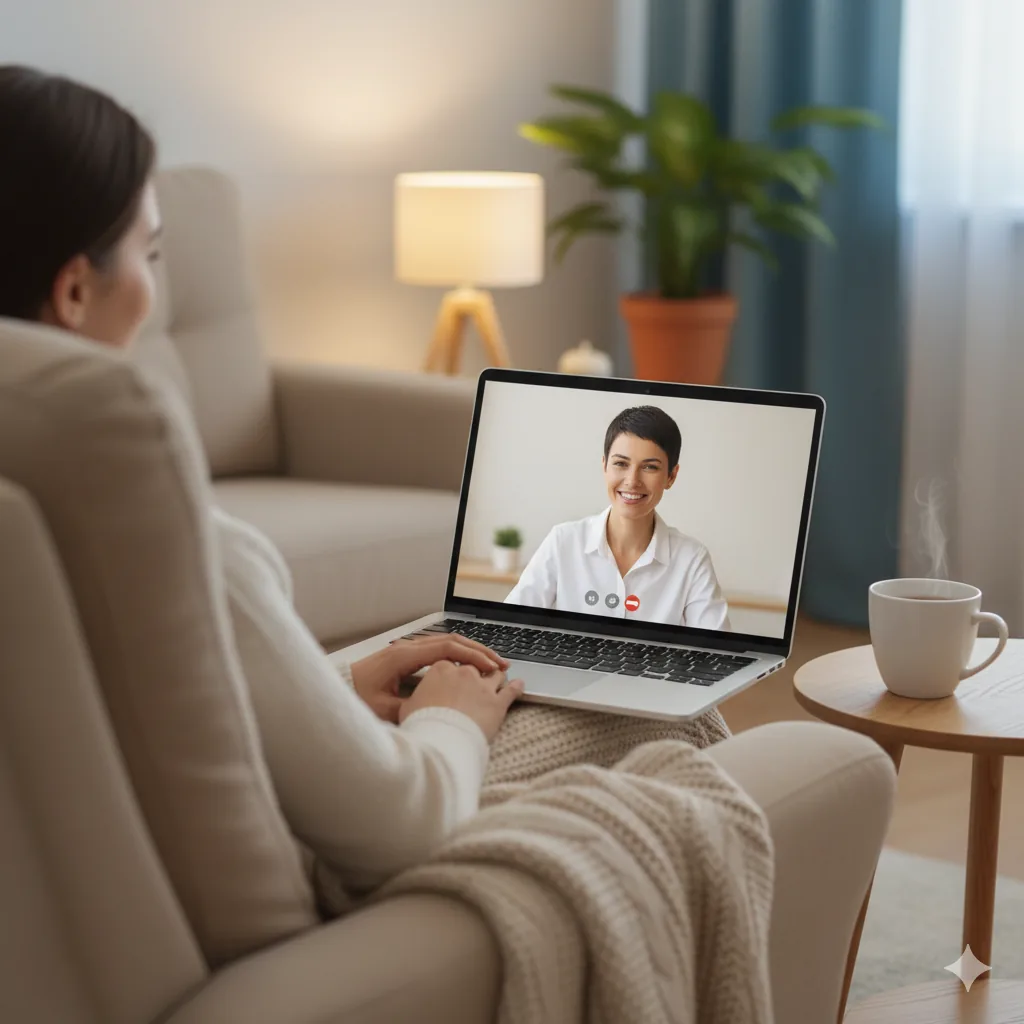
- Set up a quiet, well-lit room with no one else present.
- Check your camera, microphone and internet connection.
- Wear plain, comfortable clothing.
- Drink some water — a dry throat can affect the voice analysis.
Tip: Even, frontal lighting on your face is the single most important technical factor. A desk lamp in front of you or a ring light noticeably improves the quality of micro-expression analysis.
Stage 1: First contact
It all starts with your request — through the website, by phone at +38(067)730-99-00, by email or via messenger. During the consultation, the specialist:
- Listens to your description of the situation and the goal of the test.
- Assesses whether the check is appropriate and feasible.
- Answers all of your questions.
- Gives a preliminary cost estimate (from UAH 1,500).
The consultation is free and carries no obligation. The service is available to businesses and individuals.
Stage 2: Agreement and question set
- Signing of an electronic service agreement.
- The client provides a detailed description of the situation.
- The examiner builds a structured set of questions.
- The question set is agreed with the client.
Questions may not be leading, insulting or in violation of the participant's rights.
Stage 3: Technical briefing
15–30 minutes before the session, the specialist checks:
- The quality of the video image and sound.
- The lighting of the room.
- The stability of the internet connection.
- That no one else is in the room.
Stage 4: Baseline calibration
Before the main test, the system establishes an individual baseline of reactions:
- A series of neutral questions ("Is your name Alexander?", "Is it morning now?").
- Recording of the person's typical facial, vocal and behavioural reactions.
- The baseline accounts for natural facial activity and temperament.
Why this matters: Individual calibration makes "generic" countermeasures impossible. The baseline is unique to each participant at each session.

Stage 5: The main test
The session takes place over a video call. The specialist asks questions in sequence, alternating neutral and target ones:
- The participant answers briefly — "yes" or "no".
- The system analyses reactions across 4 channels at once.
- If needed, the specialist returns to specific questions.
- The test lasts from 40 minutes to 1.5 hours.
Stage 6: Receiving the report
- The specialist processes the data, comparing reactions to neutral and target questions.
- They prepare a written report with a breakdown for each question.
- They note the level of confidence and any limiting factors.
- The report is delivered within 24–48 hours as a secure PDF.
What will NOT happen during the session
- No pressure, manipulation or threats.
- No questions unrelated to the subject of the check.
- No "definitive verdicts" — the report contains a probability-based conclusion.
- No sharing of your data with third parties without consent.
How the analysis technology works — "Online Polygraph Without Sensors". The principle behind the platform — "How StimulTest Works". On the accuracy of the method — "Online Lie Detector Accuracy". A comparison with the classic device — "Online Lie Detector vs Classic Polygraph".
For more on the online polygraph and the available formats of a check, see the TestStimul homepage.
Getting ready for an online polygraph and still have questions? Certified examiner, full confidentiality, online and in person. Leave a request — we reply within 15 minutes.
Latest articles