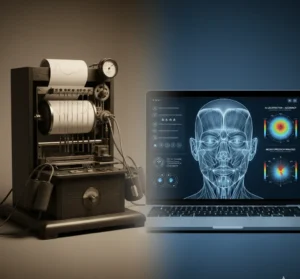
Picture this: you are completely honest, you answer every question openly, yet the polygraph reads it as a lie. Sounds unfair? Unfortunately, it is a very real scenario, and it is called a false-positive detector error. The opposite also happens — a person lies and the instrument fails to catch it. These false polygraph results are exactly why a polygraph is wrong more often than people assume, and they remain one of the hottest topics in psychophysiology and forensic examination.

Fact: According to estimates by the U.S. National Academy of Sciences (NAS), the accuracy of a classic polygraph ranges from 81% to 91%. That means anywhere from 9% to 19% of results may be wrong. By comparison, StimulTest technology, based on reaction-time analysis, reaches an accuracy of more than 95% thanks to individual calibration.
In this article we take a close look at the types of polygraph errors, their causes, real examples of false results, and explain how the modern online polygraph StimulTest technology minimizes the impact of the human factor and physiological particularities on test outcomes.
Two types of polygraph errors: false positives and false negatives
Before analyzing specific causes, let's clarify the basics. In polygraphy, as in any diagnostic method, there are two fundamental types of errors:
False positive
This is the situation where a truthful person is judged to be a liar. The polygraph records physiological reactions typical of the stress of deception, even though the person is actually answering honestly. The causes vary: heightened anxiety, fear of the procedure itself, physical discomfort, poorly worded questions, or an incompetent examiner.
False positives pose the greatest threat to innocent people. If you have ever heard stories like "they tested me on a polygraph, and it showed I was lying even though I was telling the truth," then this is most likely the type of error involved.
False negative
The opposite situation: a liar passes the test as a truthful person. The polygraph records no significant reactions even though the person is deliberately deceiving. Such errors happen when the examinee uses countermeasures, has reduced emotional reactivity, or when the test itself is built incorrectly.
Important: Both types of errors carry serious consequences. A false-positive result can destroy an innocent person's career, while a false-negative can let a guilty party escape accountability. That is exactly why choosing a reliable method and a qualified specialist is critically important.
Cause #1: Anxiety and fear of the test
The most common cause of false-positive polygraph errors is plain nervousness. A person taking a lie detector test for the first time often experiences intense stress, even if they have nothing to hide. That stress shows up physiologically: the heart beats faster, blood pressure rises, sweating increases, and the breathing rhythm changes.
The problem is that a classic polygraph measures precisely these parameters. And when a nervous person hears any question — even a completely neutral one — their body reacts almost the same way a liar's body would. As a result, the polygraph confuses anxiety with deception.
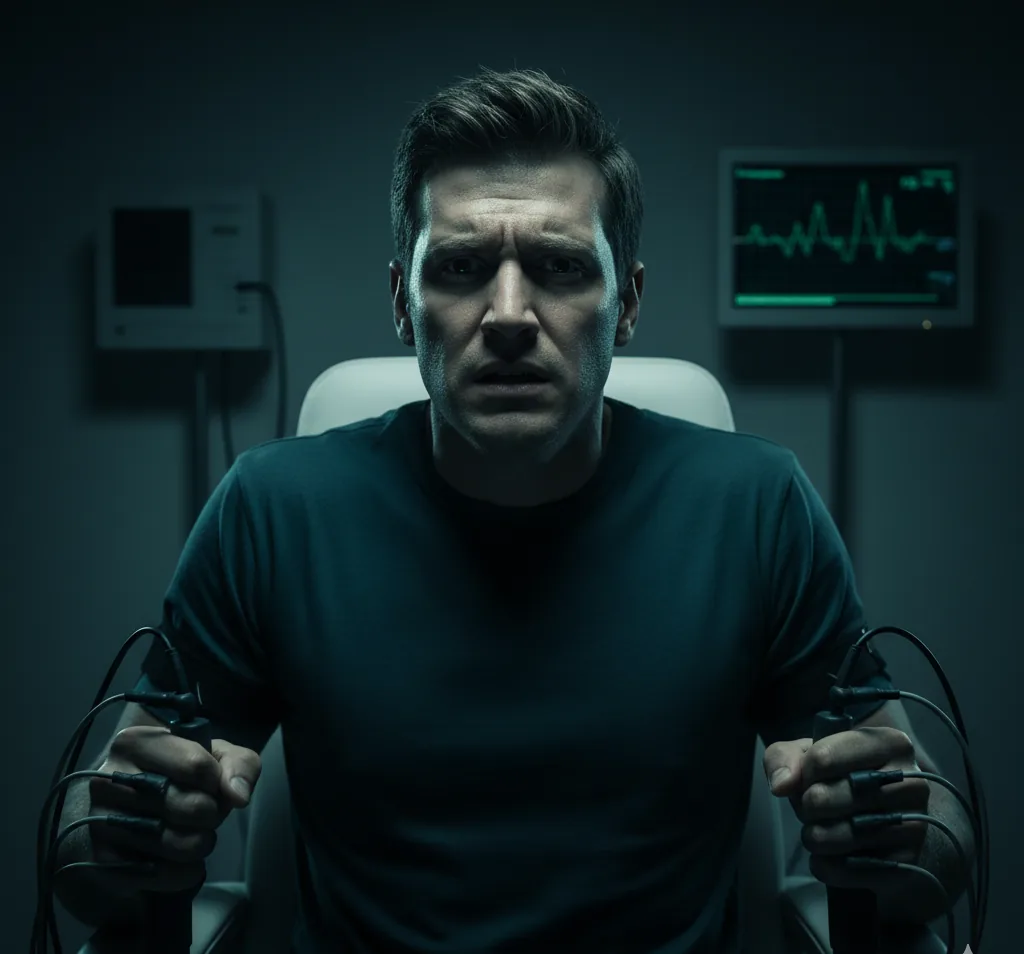
According to research published in the journal Psychophysiology, up to 20% of truthful examinees show heightened physiological reactivity during a polygraph test, which can lead to a misinterpretation of the results. This is especially relevant for people with anxiety disorders, social phobia, or post-traumatic stress disorder (PTSD).
Who is most vulnerable?
- People with generalized anxiety disorder — their baseline anxiety level is constantly elevated.
- Introverts and socially anxious individuals — the mere fact of being observed creates significant stress.
- People taking a polygraph for the first time — uncertainty and anticipation intensify the nervous response.
- Individuals tested as part of a criminal case — high stakes heighten anxiety regardless of involvement.
How StimulTest solves this problem: The StimulTest technology uses individual calibration during test preparation. The system determines the examinee's personal baseline anxiety level and factors it into the analysis of reactions. This makes it possible to distinguish "background" anxiety from a reaction to a specific stimulus linked to deception.
Cause #2: The Othello error — when the truth looks like a lie
One of the most fascinating and unjust causes of false polygraph results is the so-called Othello error. The term was coined by the well-known psychologist Paul Ekman; it comes from Shakespeare's tragedy, in which Othello interprets the fear of the innocent Desdemona as a sign of guilt.
The essence of the phenomenon: an innocent person realizes they are not believed and begins to display signs of stress identical to those the polygraph detects in liars. It is a vicious circle: the more a person fears being unjustly branded a liar, the more their reactions resemble those of someone who really is lying.
The Othello error is a cognitive trap that arises not from the instrument's technical limitations, but from a fundamental problem: the physiological manifestations of fear and guilt are virtually identical. A classic polygraph cannot tell whether a person is afraid because they are lying, or afraid because they know they might not be believed.
A real-world example: A company employee was accused of leaking confidential information. During a classic polygraph test he was so worried about a possible dismissal that his physiological reactions to the critical questions turned out to be extremely pronounced. The result was a false-positive conclusion. Only after a retest using reaction-time analysis, which took his individual profile into account, was his innocence confirmed.
Cause #3: The influence of medication and physical condition
Physical health and medication use can significantly affect the accuracy of polygraph results. A classic lie detector measures physiological parameters, which means anything that changes those parameters can distort the results.
Medications that affect results
- Beta blockers — reduce heart rate and blood pressure, which can "smooth out" reactions to significant questions, leading to false negatives.
- Sedatives and tranquilizers — suppress the autonomic nervous system, lowering the body's overall reactivity.
- Stimulants (large doses of caffeine, amphetamines) — raise the baseline level of arousal, creating "false noise" and leading to false positives.
- Antihypertensive drugs — affect the cardiovascular system, altering the normal pattern of reactions.
- Antidepressants and anxiolytics — modify emotional reactivity, making the results harder to interpret.
Physical states that distort results
- Chronic pain — constantly activates the body's stress response.
- Insomnia and fatigue — reduce control over autonomic functions.
- Dehydration — affects the skin's electrical conductivity.
- Hormonal disorders — thyroid disease in particular can increase or decrease overall reactivity.
A qualified polygraph examiner is required, before the procedure begins, to find out whether the examinee is taking any medication and to assess their general physical condition. Even so, and even with that information in hand, a classic polygraph cannot always properly compensate for the influence of pharmacological factors.
Cause #4: An unqualified examiner
The human factor is one of the main reasons for false polygraph test results. The outcome of a test largely depends on the competence and experience of the specialist conducting it. An unqualified examiner can make a number of critical mistakes.

Typical mistakes of an inexperienced specialist
- Poorly worded questions — ambiguous or overly complex questions can create cognitive load and stress unrelated to deception.
- Inadequate calibration — an insufficient or improperly conducted pre-test interview leads to an incorrect baseline.
- Subjective interpretation — in classic polygraphy a significant part of the conclusion rests on the examiner's subjective judgment, which leaves room for bias.
- Pressure on the examinee — an aggressive interviewing style can provoke a stress reaction in a truthful person.
- Ignoring context — failing to account for the examinee's cultural, psychological, and physiological particularities.
A study conducted by the American Polygraph Association (APA) showed that the difference in accuracy between highly qualified and inexperienced examiners can reach 15–20 percentage points. That means, with identical equipment, the result can differ dramatically depending on who runs the test.
The StimulTest advantage: The StimulTest system largely automates the analysis process, minimizing subjectivity of interpretation. A computer algorithm evaluates reaction times to stimuli against clear mathematical criteria, rather than on the specialist's subjective impression.
Cause #5: Poorly constructed test questions
The quality of the questions is one of the most critical factors in polygraph testing. Even an experienced examiner can make a wording mistake that distorts the results of a lie detector test.
Problems with control questions
The classic polygraph uses the comparison-question method (CQT — Control Question Test). The idea is that the reaction to "hot" (relevant) questions is compared with the reaction to control questions. If the control questions are chosen poorly — too weak or too strong — the comparison will be incorrect.
For example, if a control question is emotionally neutral for a particular person, even a minimal reaction to a relevant question (caused by simple surprise or discomfort) will be read as a sign of deception. And vice versa: if the control question is too strong, a genuine deception reaction may be masked.
Problems with relevant questions
- Ambiguity — a question may have several interpretations, and the person reacts to the "second meaning" rather than to the direct content.
- Overly broad wording — a question like "Have you ever taken something that wasn't yours?" can trigger a reaction in someone who took a candy from a bowl as a child, even though the test concerns corporate theft.
- Emotional charge — certain topics (violence, death, one's intimate life) can provoke a strong reaction regardless of how truthful the answer is.
Cause #6: External factors and test conditions
The environment in which a polygraph test is conducted can significantly affect the results. These factors are often underestimated, yet their impact on a person's physiological parameters is scientifically proven.
Room temperature
A room that is too warm or too cold affects sweating and skin conductivity. If a person is hot, they sweat more, creating "noise" in the GSR channel. If it is cold, peripheral blood vessels constrict, which affects pulse and blood-pressure readings.
Noise and lighting
Extraneous sounds — phone calls, conversations behind the wall, the hum of an air conditioner — can provoke sudden physiological reactions unrelated to the content of the questions. Lighting that is too bright or, conversely, too dim creates discomfort and raises the overall level of stress.
Duration of the procedure
Dragging out the test leads to physical fatigue, reduced concentration, and shifts in baseline physiological readings. After 1.5–2 hours of continuous testing, a person's reactions become less differentiated, which increases the likelihood of both types of errors.
Note: The standards of the American Polygraph Association require testing to be carried out in a soundproofed room with a comfortable temperature (20–24 °C) and soft lighting. A violation of these conditions can be grounds for challenging the results.
Cause #7: Individual psychological characteristics
Every person has a unique psychophysiological profile, and what is "normal" for one may be an "anomaly" for another. These individual differences are yet another source of polygraph errors.
Sociopathic and psychopathic traits
People with antisocial personality disorder often have reduced emotional reactivity. They can lie without any physiological signs of stress, which leads to false negatives. According to various studies, 15% to 25% of individuals with pronounced psychopathic traits successfully "pass" a classic polygraph.
Excessive emotionality
The opposite situation: people with heightened emotionality react to any question far too strongly. Their reactions to neutral, control, and relevant questions can be almost identical in intensity, which complicates differentiation and raises the risk of a false-positive result.
Cultural and language barriers
If the test is conducted in a language that is not the examinee's native tongue, the extra cognitive load of translating and understanding the questions creates physiological "noise" unrelated to the truthfulness of the answers.
Polygraph error statistics: what the research says
For a complete picture, let's review the key studies on the accuracy of the classic polygraph:
| Study | False positives | False negatives | Overall accuracy |
|---|---|---|---|
| NAS (2003) | 10–15% | 8–12% | 81–91% |
| APA Meta-Analysis (2011) | 8–12% | 5–10% | 85–92% |
| British Psychological Society (2004) | 12–18% | 7–13% | 80–88% |
| StimulTest (internal data) | 2–4% | 2–3% | 95–97% |
As we can see, even the best results of a classic polygraph leave room for error. The false-positive rate is especially alarming — up to 18% of innocent people may be wrongly branded as liars. StimulTest technology substantially reduces both types of errors thanks to a fundamentally different assessment mechanism.
How StimulTest individual calibration works
Unlike the classic polygraph, which relies on general physiological reactions, the StimulTest system analyzes the reaction time to disguised stimuli. This is a fundamentally different approach that minimizes the influence of anxiety, medication, and other extraneous factors.
The calibration stage
Before the main test, the system runs a series of calibration tasks that determine:
- Individual reaction speed — the baseline for the specific person, not the population average.
- Reaction-time variability — the natural spread of readings characteristic of this particular examinee.
- The influence of anxiety — how much overall nervousness affects the speed of information processing.
- The cognitive profile — individual particularities in processing verbal and visual information.
Thanks to this calibration, the system creates a personalized benchmark against which reactions during the main test are compared. This makes the results far less dependent on individual traits, physical condition, or the examinee's level of anxiety.
Technical detail: The StimulTest algorithm analyzes not the absolute reaction time, but the relative delay — the difference between the reaction to neutral and to critical stimuli, adjusted for the individual baseline. This approach effectively removes the influence of "external noise": nervousness, medication, and fatigue.
What to do if you got a false polygraph result
If you are confident in your truthfulness but the polygraph result came out unfavorable, there are several steps you can take:
- Do not panic. In Ukraine, a polygraph result is not legally binding evidence. It is advisory rather than procedural in nature.
- Request a retest. Preferably with a different specialist or using a different method (for example, the StimulTest reaction-time analysis).
- Document the circumstances. Write down all the details: your physical condition, medications, stress level, room conditions, and the examiner's behavior.
- Consult a lawyer. If the polygraph result is being used against you, an attorney can challenge its reliability.
- Take a StimulTest examination. The modern method with individual calibration minimizes the risk of a false-positive error.
How to minimize the risk of a false result: recommendations
If you are about to take a polygraph test, follow these recommendations to reduce the risk of an erroneous result:
- Get a good night's sleep beforehand — fatigue intensifies anxiety and reduces control over reactions.
- Avoid caffeine and alcohol — they affect physiological readings.
- Disclose your medications — be sure to tell the examiner what you are taking.
- Ask for an explanation of the procedure — understanding the process reduces anxiety.
- Ask questions — if the wording of a question is unclear, say so.
- Choose a qualified specialist — check the examiner's certification and experience.
Tip: The best way to avoid a false result is to choose a proven method with demonstrated accuracy. StimulTest for individuals offers testing with individual calibration that accounts for your personal particularities and minimizes the risk of error.
The future of polygraphy: moving toward objectivity
Modern science is actively looking for ways to increase the accuracy and reliability of lie detector tests. Among the promising directions are:
- Reaction-time analysis — the technology StimulTest already uses is considered one of the most promising approaches.
- Functional MRI (fMRI) — allows brain activity to be observed directly, but is still too expensive for mass use.
- Facial micro-expression analysis — computer recognition of emotions from the movement of facial muscles.
- Artificial intelligence and machine learning — algorithms capable of detecting complex patterns invisible to the human eye.
The overall trend is clear: a move from subjective interpretation to objective, computerized methods of assessment. StimulTest technology already embodies this approach today, combining a scientifically grounded method with computer-based data processing and individual calibration.
Conclusions
A polygraph can show a lie when you are telling the truth — and this is not a rare glitch but a systemic problem of classic polygraphy. Anxiety, the Othello error, medication, an unqualified specialist, poorly worded questions, unsatisfactory test conditions — each of these factors can distort the result.
Understanding the reasons for false results is the first step toward preventing them. By choosing a polygraph testing service powered by StimulTest, you get a technology that accounts for the individual particularities of each person, minimizes subjectivity, and delivers one of the highest accuracy rates among modern truth-verification methods.
If you are choosing a testing method — whether for the personnel security of a government department, a corporate investigation, or a private matter — pay attention to proven accuracy and scientific grounding. Your truth deserves a reliable tool.
Don't leave your fate to chance — a certified examiner and technology with individual calibration minimize the risk of false results. Certified examiner, full confidentiality, online and in person. Leave a request — we reply within 15 minutes.
Latest articles