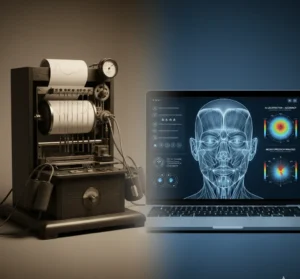
The question of whether a reliable alternative to the classic polygraph exists comes up more and more often — in corporate settings, in private investigations, in family situations. An online lie detector is not a marketing buzzword but a distinct class of technology with its own methodological foundation. In this article we make an honest comparison of the two approaches so you can reach an informed decision.
How the classic polygraph works
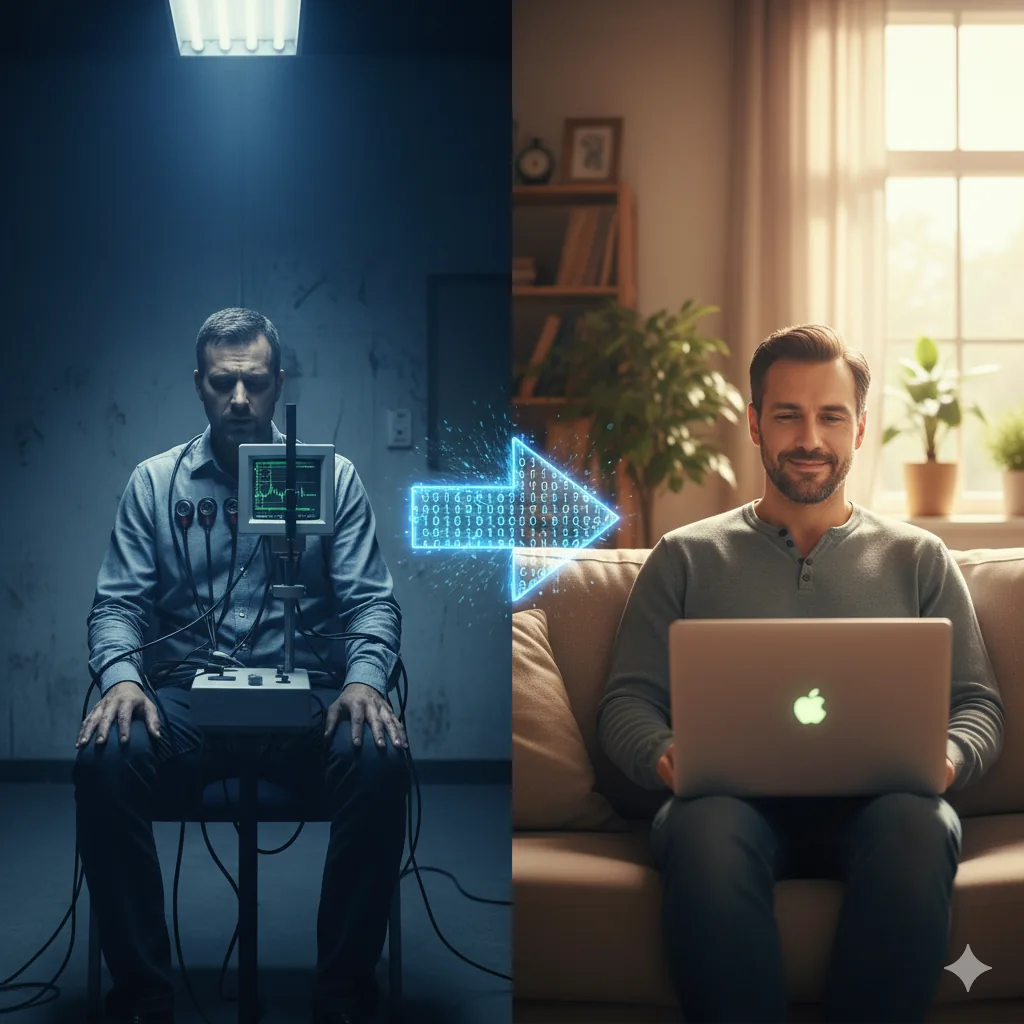
A traditional polygraph is a device that simultaneously records physiological indicators:
- the galvanic skin response (perspiration);
- arterial blood pressure and pulse rate;
- breathing characteristics (thoracic and abdominal);
- limb tremor and motor activity.
The examiner physically attaches sensors to the person's body and watches deviations in the readings in real time. The conclusion rests on a qualified interpretation of the polygrams. The key limitation: both parties must be physically present in the same room.
How an online lie detector works
An online system analyzes behavioral and psychophysiological signals remotely over a video link:
- Computer analysis of micro-expressions (FACS) — tracking the movement of more than 40 facial muscles and classifying concealed emotions.
- Oculomotor activity — gaze direction, pupil reaction latency, involuntary eye movements.
- Voice analysis — micro-tremor, changes in pace and pitch.
- Behavioral patterns — posture, gestures, head movements, mismatches between channels.
For a detailed look at the technology, see our article "Online Polygraph Without Sensors: How It Works". The way the platform operates is explained on the "How StimulTest works" page.
Comparison table: online vs classic
| Criterion | Classic polygraph | Online lie detector |
|---|---|---|
| Physical presence | Required | No, video link only |
| Physical sensors | 4–6 sensors on the body | None |
| Average cost (Ukraine) | UAH 2,500 – 5,000 | from UAH 1,500 |
| Session length | 2–4 hours | 1–2 hours |
| Accuracy (average) | 80–90% | 85–93% |
| Preparation | Travel, a dedicated office | A device with a camera, Wi-Fi |
| Stress for the participant | Higher | Lower |
| Geography | The specialist's city | Anywhere with internet |
| Speed of arranging | 1–5 days | Within a few hours |
What the table shows: The online format wins on cost (a 30–40% saving), speed, convenience and geography. The classic polygraph keeps an edge only where an in-person format is required by regulation.
Accuracy: where the real difference lies
The classic polygraph records autonomic reactions. But the method has weak points:
- Stress from the sensors and an unfamiliar office distorts the baseline.
- The "accused by the test" effect — an innocent person's anxiety is read as a sign of deception.
- Some people (under the influence of medication, or with antisocial disorders) show reduced reactions.
An online detector analyzes micro-expressions and behavior — channels that are even harder to control consciously. A multichannel approach lowers the likelihood of both types of error. For a detailed analysis, see the article "Online Lie Detector Accuracy: What Studies Show".
When to choose the classic polygraph
- Official law-enforcement investigations with a regulated in-person format.
- Situations where the participant has no stable internet or camera.
- A need to notarize the results at the same time as the testing.
When an online lie detector is the optimal solution
For the vast majority of corporate and private situations, the online format is the better choice:
- Testing candidates or employees from other cities — ideal for workforce security and staff selection.
- Confidential situations — no meetings at the office, no witnesses.
- Checks under conditions of limited mobility or during wartime.
- Mass personnel checks for business — a substantial saving of time and budget.
- Personal situations: checking a relationship, personal safety.
Tip: Not sure which format to choose? Reach out for a free consultation — the TestStimul specialists will help you determine the optimal solution for your situation.
Legal status in Ukraine
In Ukraine, the results of both the classic and the online polygraph are not standalone court evidence. Both methods are used in:
- private investigations and corporate compliance;
- HR processes and corporate security systems;
- pre-trial negotiations and mediation;
- family-law disputes as a supporting argument.
Important: Testing is strictly voluntary, regardless of the format. Coercing someone into taking a polygraph is a violation of the law.
The verdict from the TestStimul specialists
Neither method is "better" in absolute terms — the choice depends on the specific task. However, for most modern situations an online lie detector offers greater convenience, speed and often better accuracy thanks to reduced background stress. The TestStimul team specializes in the remote format.
Still not sure what to expect from a remote check? Read "How to Prepare for an Online Polygraph". We debunk the stereotypes in the article "Top 8 Online Polygraph Myths".
Learn more about the online polygraph and the testing formats on the TestStimul homepage.
Compare the online lie detector and the classic polygraph, then pick the format that fits your case. Certified examiner, full confidentiality, online and in person. Leave a request — we reply within 15 minutes.
Latest articles