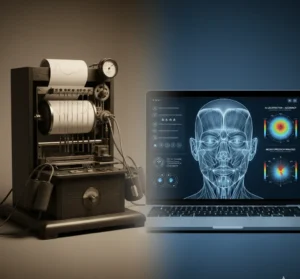
A polygraph test is a powerful tool for verifying truthfulness, used in corporate security, criminal investigations, personnel hiring and personal matters. Yet not everyone can go through this procedure. Understanding who cannot take a polygraph comes down to a whole list of contraindications tied to physical health, mental state, age and current circumstances. Ignoring these limits can distort the test results or harm the examinee's health.

Worth knowing: According to estimates from the American Polygraph Association (APA), between 10 and 15% of test candidates have one condition or another that can affect the quality or admissibility of testing. That is precisely why a qualified examiner always holds a preliminary interview to identify contraindications.
In this article we look at every category of people who should not or are not advised to take a polygraph, explain why these limits exist, and show how the online polygraph technology StimulTest solves most of these problems thanks to a fundamentally different working mechanism.
How a classic polygraph works and why contraindications arise
To understand the nature of these limits, you need to know exactly what a lie detector measures. A classic polygraph records the body's physiological parameters: heart rate, blood pressure, the rhythm and depth of breathing, skin conductivity (sweating level) and motor activity. The logic is that lying causes stress, and stress causes measurable changes in the autonomic nervous system.
The problem arises when these physiological parameters are already disrupted by illness, medication or other factors. In that case the baseline — the examinee's individual "norm" — becomes unstable or abnormal, and it becomes impossible to tell a stress reaction to a lie from a reaction caused by disease. This is the main reason contraindications to polygraph testing exist.
Medical contraindications: cardiovascular disease
Chronic heart conditions
Cardiovascular pathologies are one of the most serious contraindications to taking a polygraph. The reason is twofold: first, unstable heart function distorts the pulse and blood pressure readings, which are key measurement channels. Second, the procedure itself creates a stress load that can be dangerous for the patient.
This category includes:
- Coronary heart disease (CHD) — unstable angina can flare up during the procedure.
- Heart failure (NYHA classes II–IV) — the extra load on the heart under stress can trigger decompensation.
- Arrhythmias (atrial fibrillation, extrasystole) — an irregular heart rhythm makes the pulse channel practically unusable for analysis.
- A recent myocardial infarction — the recommended waiting period is at least 6 months.
- A pacemaker — the electronic device can interfere with the polygraph's sensors and distort the readings.
Caution: If a person with heart disease takes a polygraph anyway without telling the examiner, the test results will be unreliable. Any fluctuation in blood pressure or heart rhythm may be mistakenly read as a sign of lying.
Hypertension
Patients with arterial hypertension of the second and third degree also face limits. The polygraph's blood pressure cuff squeezes the upper arm for a long time (a session can last from 1.5 to 3 hours), which creates discomfort and additional elevated pressure. On top of that, antihypertensive drugs affect the autonomic nervous system and alter physiological responses, reducing the validity of the results.
Medical contraindications: neurological disorders
Epilepsy
Epilepsy is an absolute contraindication to polygraph testing. The stress that accompanies the procedure can trigger a seizure, posing a direct threat to the examinee's health. Even during remission, when seizures have been absent for a long time, the risk remains, because the very context of the test — a closed room, sensors on the body, stressful questions — creates conditions of heightened nervous excitability.
Beyond the threat of a seizure, antiepileptic drugs (valproates, carbamazepine, lamotrigine) significantly affect the autonomic nervous system, suppressing physiological responses and making polygraph results unreliable.

Other neurological conditions
A number of other neurological diseases also limit the ability to take a polygraph:
- Multiple sclerosis — damage to the myelin sheaths of the nerves disrupts nerve conduction, distorting the skin conductivity readings.
- Parkinson's disease — tremor and other motor symptoms create constant "noise" in the motor activity channel.
- Peripheral neuropathies — reduced sensitivity and sweating in the limbs affect the operation of the galvanic skin response sensors.
- Consequences of traumatic brain injury — cognitive impairments can affect understanding of the questions and the forming of answers.
Medical contraindications: respiratory disease
Breathing is one of the key recording channels on a polygraph. Two pneumograph sensors (on the chest and on the abdomen) capture the frequency, depth and rhythm of respiratory movements. When these parameters are disrupted by disease, the examiner cannot interpret the results correctly.
Chronic obstructive pulmonary disease (COPD)
Patients with COPD have a disrupted breathing pattern even at rest: prolonged exhalation, shortness of breath, periodic coughing. These symptoms create an abnormal baseline against which it is impossible to isolate the changes caused by the stress of a false answer.
Bronchial asthma
Bronchial asthma in a severe or moderate form is a serious limitation. Stress during the test can trigger a bronchospasm. In addition, bronchodilator drugs (salbutamol, formoterol) affect the heartbeat and autonomic nervous system, further distorting the polygraph data.
Tip: If you have a chronic respiratory disease but still need a truthfulness check, consider the StimulTest technology. It uses no breathing sensors and works by analyzing reaction time. That is why respiratory contraindications do not apply to it.
Other respiratory conditions
- Pneumothorax (in the medical history) — compression of the chest by the sensors can be dangerous.
- A recent bout of pneumonia — it is recommended to wait for full recovery (at least 2–4 weeks).
- Sleep apnea — although this pathology is not an absolute contraindication, it can reduce the quality of the breathing baseline, especially if the examinee has not had enough sleep.
Medical contraindications: pregnancy
Pregnancy is one of the most frequently cited contraindications to polygraph testing, and there are several reasons for this:
- The ethical aspect — a pregnant woman and her unborn child should not be subjected to unnecessary stress, which is an inherent part of the procedure.
- Physiological changes — during pregnancy there are significant changes in the cardiovascular system: an increase in circulating blood volume, a faster heartbeat, and reduced peripheral vascular resistance. These changes make the polygraph's cardio channel unreliable.
- Hormonal levels — elevated levels of cortisol, progesterone and other hormones alter the baseline state of the autonomic nervous system.
- Emotional lability — the natural hormonal swings during pregnancy can create false-positive reactions, when the examinee responds emotionally even to neutral questions.
Most professional examiners decline to test pregnant women at any stage. This is not a legal ban but a standard of professional ethics and common sense.
Psychological and psychiatric contraindications
Severe mental disorders
Mental illnesses form a separate, important category of contraindications. The polygraph works on the assumption that the examinee perceives the questions adequately, understands the difference between truth and lies, and is capable of giving conscious answers. When these conditions are not met, the test loses its validity.
Absolute contraindications include:
- Schizophrenia and schizoaffective disorder — distorted perception of reality, delusions and hallucinations make correct testing impossible.
- Acute psychosis (of any etiology) — a person in a state of psychosis is unable to interact adequately with the examiner.
- Severe intellectual disability — an inability to understand the instructions and questions.
- Dementia (moderate and severe stages) — cognitive impairments rule out the possibility of conscious answers.
- An acute manic episode in bipolar disorder — heightened excitability and psychomotor agitation distort all measurement channels.
Anxiety and panic disorders
It is worth singling out generalized anxiety disorder and panic disorder. Although they are not absolute contraindications, these conditions significantly reduce the reliability of testing. A person with a high level of baseline anxiety shows heightened physiological reactivity to any stimuli — not only those connected with lying. As a result, the examiner may get an excessive number of false-positive reactions.
Research note: A study published in the journal Applied Psychophysiology and Biofeedback (2018) showed that people with a diagnosed anxiety disorder are 2.3 times more likely to produce a false-positive result on a classic polygraph compared with a control group.
Post-traumatic stress disorder (PTSD)
People with PTSD show hyperreactivity of the autonomic nervous system and can have intense physiological reactions to questions that accidentally touch on their traumatic experience. Moreover, the polygraph testing procedure (an enclosed space, sensors on the body, an interrogation format) can itself become a trigger that worsens PTSD symptoms.
Taking psychotropic medication
Even when the examinee's mental state is controlled with medication, the psychotropic drugs themselves affect physiological responses:
- Antidepressants (SSRIs, SNRIs) — affect heartbeat, sweating and autonomic regulation.
- Antipsychotics — suppress emotional reactions and reduce physiological reactivity.
- Tranquilizers (benzodiazepines) — create an abnormally flat physiological picture.
- Psychostimulants (for treating ADHD) — raise the baseline level of arousal.
Age limits for taking a polygraph
Children and teenagers
The minimum age for polygraph testing is a question regulated differently in different countries. The commonly accepted standard among professional examiners is at least 14 years. However, most specialists recommend an age threshold of 16–18 years.
The reasons for age limits:
- Immaturity of the autonomic nervous system — in children and teenagers, physiological reactions are less stable and predictable, which complicates interpretation.
- Cognitive development — the ability to clearly distinguish truth from lies, and to understand the consequences of one's answers, forms gradually.
- Heightened suggestibility — children are more easily influenced by authority (the examiner), which can distort their reactions.
- Ethical considerations — subjecting a child to the stress of testing without dire necessity is considered unacceptable.
Elderly people
For people over 70–75 years there are also limits, though they are not absolute. With age, the reactivity of the autonomic nervous system declines, sweating decreases, and cognitive changes may develop. In addition, older people more often have concomitant conditions (cardiac, neurological) that are contraindications in their own right.

Situational factors: temporary limits
Besides chronic conditions, there are a number of temporary factors that make taking a polygraph impossible or undesirable at a specific point in time.
Physical fatigue and lack of sleep
Serious sleep deprivation (less than 4 hours of sleep before the test) or pronounced physical fatigue reduces the stability of physiological readings and impairs cognitive function. Results of a test conducted in a state of exhaustion cannot be considered reliable. A professional examiner always asks the examinee about sleep quality and general well-being before starting the procedure.
Alcohol and drug intoxication
Conducting a polygraph under the influence of alcohol or narcotic substances is an absolute contraindication. Any psychoactive substance alters the working of the central nervous system, distorts autonomic reactions and impairs cognitive function. A test in such a state will have no validity at all.
Important: Alcohol affects physiological readings even after the feeling of intoxication has passed. The recommended minimum interval between drinking alcohol and taking a polygraph is 24 hours, and for large doses, 48 hours.
The effect of medication
Even ordinary medicines that are not psychotropic can affect polygraph results:
- Antihistamines — some of them (first generation) have a sedative effect.
- Painkillers (opioids) — suppress central nervous system reactions.
- Thyroid medications — alter baseline metabolism and heartbeat.
- Beta blockers — reduce heartbeat and blood pressure, masking stress reactions.
The examiner must be informed about all the medications the examinee is taking, in order to account for their effect or reschedule the procedure.
Acute stress and emotional shock
A person who has recently gone through severe emotional stress — the loss of a loved one, an accident, a dismissal, a serious conflict — is in a state of heightened physiological reactivity. All the polygraph readings will be "noisy" with background stress, and isolating the reaction connected specifically to a false answer becomes considerably harder.
Acute illness and pain
A cold with a high fever, a toothache, a flare-up of a chronic disease — any condition accompanied by physical discomfort or pain is grounds for rescheduling the test. Painful sensations create a constant physiological reaction that "overlaps" with the reactions to the questions and makes interpretation impossible.
The right to refuse a polygraph: the legal aspect
It is important to understand that in Ukraine and most countries around the world, taking a polygraph is voluntary. No one can force a person to take a lie detector test without their written consent. This applies both to criminal investigations and to corporate checks.
Legal nuances:
- An employer cannot dismiss an employee for refusing to take a polygraph (except for certain positions in law enforcement, where testing is provided for by law).
- Polygraph results are not direct evidence in court — they can be used only as supplementary material, and even then with the consent of both parties.
- The examinee has the right to stop the test at any moment without explaining why.
- Medical contraindications are a lawful and legitimate basis for refusing a polygraph.
Tip: If you are offered a polygraph but have contraindications, let them know in advance. A qualified specialist will offer an alternative — for example, a check using StimulTest, which has far fewer limitations.
Comparison table: contraindications for a classic polygraph and StimulTest
StimulTest technology works on a fundamentally different principle: it analyzes reaction time to visual stimuli presented on a computer screen. It uses no breathing sensors, no blood pressure cuff and no galvanic skin response sensors. This substantially narrows the list of contraindications.
| Contraindication / limitation | Classic polygraph | StimulTest |
|---|---|---|
| Cardiovascular disease | ✘ Contraindication | ✔ Allowed |
| Epilepsy | ✘ Absolute contraindication | ⚠ On a doctor's advice* |
| Pregnancy | ✘ Contraindication | ✔ Allowed |
| Respiratory disease | ✘ Contraindication | ✔ Allowed |
| Severe mental disorders (psychosis, schizophrenia) | ✘ Absolute contraindication | ✘ Contraindication |
| Anxiety disorder | ✘ Reduces reliability | ✔ Minimal effect |
| Age under 14 | ✘ Contraindication | ⚠ Limited (from age 12) |
| Age over 75 | ✘ Limitation | ✔ Allowed** |
| Taking medication | ✘ Significant effect | ✔ Minimal effect |
| Physical fatigue / lack of sleep | ✘ Reduces reliability | ⚠ Slight effect |
| Alcohol / drug intoxication | ✘ Absolute contraindication | ✘ Contraindication |
* For people with the photosensitive form of epilepsy, StimulTest may be limited because it uses visual stimuli on a screen. A neurologist's consultation is required.
** Provided that cognitive function is preserved and the person is able to work with a computer.
Why StimulTest has fewer contraindications
As the comparison table shows, StimulTest has a significantly shorter list of limitations. This is explained by the fundamental difference in how it works:
- No physiological sensors — there is no blood pressure cuff, no pneumograph belts, no finger sensors. As a result, cardiac, respiratory and dermatological problems do not affect the outcome.
- Measuring cognitive rather than autonomic reactions — StimulTest analyzes reaction time at the subconscious level. Medications that affect the autonomic nervous system have virtually no effect on the speed of cognitive processing of stimuli.
- A lower level of stress — the procedure resembles taking an online test rather than an interrogation with sensors. This substantially lowers the risks for people with anxiety disorders, heart problems and for pregnant women.
- A shorter duration — a StimulTest session usually takes 30–45 minutes instead of the 1.5–3 hours for a classic polygraph, which reduces the physical strain.
Fact: According to TestStimul's internal statistics, fewer than 3% of clients have contraindications to taking StimulTest, whereas for a classic polygraph this figure reaches 12–15%.
What to do if there are contraindications to a polygraph
If you, or your client or employee, have a condition that is a contraindication to a classic polygraph, there are several courses of action:
- Reschedule the testing — if the contraindication is temporary (illness, fatigue, the effect of medication), it is enough to wait for recovery or for the drug to be discontinued.
- Choose an alternative technology — StimulTest for individuals is suitable for most people with medical contraindications to a polygraph.
- Obtain a medical opinion — in disputed cases, a doctor can assess the risks and give permission to take the test with appropriate caveats.
- Use other verification methods — analysis of microexpressions, a cognitive interview, the SCAN method (analysis of written statements).
Who decides whether a polygraph is allowed
The final decision on whether a test can be conducted is made by the examiner during the pre-test interview. A qualified specialist always:
- Asks about the state of health, chronic diseases and any medications being taken.
- Assesses the examinee's current psycho-emotional state.
- Finds out whether the examinee has had enough sleep and has not consumed alcohol.
- Explains the procedure and obtains written informed consent.
- On identifying contraindications, declines to conduct the test or offers an alternative.
An examiner's refusal to run a test when contraindications are present is not an obstacle but a sign of professionalism and care for the examinee's health and the validity of the results.
Common myths about contraindications
There are plenty of false beliefs surrounding the topic of polygraph limits:
- Myth: "A polygraph is dangerous to health" — Fact: the procedure itself carries no physical danger. Contraindications are connected not to danger but to the unreliability of the results (except for cardiological and neurological risks from stress).
- Myth: "Contraindications can be used to avoid a test" — Fact: claimed contraindications are verified, and when alternative technologies (StimulTest) are available, evading a check becomes considerably harder.
- Myth: "People with disabilities are completely banned from the polygraph" — Fact: disability in itself is not a contraindication. Everything depends on the specific diagnosis and its effect on the physiological parameters.
- Myth: "Pregnant women are barred from any truthfulness check" — Fact: it is specifically the classic polygraph that is barred. StimulTest can be conducted during pregnancy, because it creates no physical strain and no significant stress.
Bottom line: contraindications are not a verdict but a reason to choose the right method
The list of people who cannot take a polygraph is fairly broad: cardiovascular disease, epilepsy, severe mental disorders, pregnancy, respiratory pathologies, the effect of medication, age limits and situational factors. Yet the presence of contraindications does not mean a truthfulness check is impossible.
StimulTest technology was created with the limitations of the classic polygraph in mind. Thanks to the absence of physiological sensors and a fundamentally different analysis mechanism (measuring the subconscious reaction time to masked stimuli), StimulTest is available to the vast majority of people for whom the traditional lie detector is contraindicated.
If you have medical limitations or you are unsure whether you can take a test, reach out to the specialists at TestStimul — they will select the best testing method with your health condition and security needs in mind.
Remember: Contraindications to a polygraph are not a reason to give up on a check. They are a reason to choose the technology that suits you. StimulTest makes truthfulness testing available to everyone.
We will find a safe format even when there are medical limitations. Certified examiner, full confidentiality, online and in person. Leave a request — we reply within 15 minutes.
Latest articles