"I would have noticed. I'm not blind." Psychologists hear this line from clients almost every day — and often from the very people who spent years living beside a partner who had a second family, a parallel relationship, or a long-running affair at work. The paradox is that being sure of your own attentiveness is arguably the first and most reliable trap people fall into in long relationships.
The brain is wired to protect us from destructive information. If your whole life — shared plans, children, a mortgage, memories of your youth — is suddenly thrown into question, the mind makes a logical move: it stops seeing what it does not want to see. Psychologists call this cognitive dissonance. In plain terms it sounds simpler: "there's no way he or she would lie to me."
In this article we look at 10 signs of a cheating partner that behavioral researchers and family therapists consider the most telling — and that, at the same time, are most often missed by the very partners who believe they pay close attention. This is not "paranoia," not a "witch hunt," and not a reason to start a fight. These are reference points that help you see what usually hides in a blind spot.
Key fact: According to research by the American Association for Marriage and Family Therapy, roughly 30–40% of people in long-term relationships have encountered some form of betrayal (emotional, physical, or financial). Yet more than half of partners failed to notice it for a year or longer — even when the signs were literally right in front of them.
Why we miss the obvious signs of a cheating partner: the "I would have seen it" trap
Before we get to the signs themselves, it is important to understand why even the most observant person can spend months living beside a partner who is hiding a parallel relationship. A cheater's behavior is rarely abrupt — in most cases it is a slow, gradual shift of the norm. And our awareness adapts to the new "normal" just as gradually.
Imagine your partner suddenly starts staying late at work — first by 15 minutes, then by an hour, then by two. If they came home at three in the morning on the very first day, you would notice instantly. But when the change is 10 minutes a week, the brain simply rewrites the "normal time to come home." This is called the sliding-baseline effect, and most cases of long-term concealment of an affair are built on it.
Sign 1. Changes in the daily routine and unexpected delays
This is a classic and, at the same time, the least obvious sign of a cheating partner — because changes in routine are part of normal life. A partner might pick up a new project, a gym membership, a work party. But attentive behavioral researchers focus not on the fact of the delays themselves, but on their consistency and lack of transparency.
Warning markers: your partner can't clearly explain where they were. The explanations differ every time (one day "the meeting ran long," then "traffic," then "I picked up a colleague from the airport"). "Dead" stretches appear in the phone log when they don't pick up. They come home at an illogical hour — for example, back from a "work meeting" at 11:30 p.m., long after every office has closed.
Another subtle signal is sudden unpredictability after years of a steady schedule. If someone left the house at 8:30 and came home at 7:00 p.m. for 10 years, and now the schedule "floats" with no visible reason and vague explanations — that's a cue to look more closely. Not to accuse, but precisely to look closer.
Sign 2. New habits and interests: appearance, sport, music
A sudden interest in one's own appearance is one of the most common and, at the same time, most "socially acceptable" signs — which is exactly why it slips past. Your partner signed up for the gym? Great, they'd been talking about it for ages. Bought new clothes? Well, the old ones were worn out. Started listening to unfamiliar music? Everyone's entitled to new tastes.

Taken alone, each one really means nothing. But family therapists warn: when 3–4 such changes appear at once, that's already a pattern. Especially if the person is trying to look younger: switching to a more youthful haircut, starting to wear a perfume they used to refuse, taking an interest in music or slang usually favored by an audience 10–15 years younger.
Psychologists call this the "second adolescence syndrome." It doesn't always point to cheating — sometimes it's a genuine midlife crisis or a reaction to stress. But when this syndrome combines with other markers from the list, it's no longer a coincidence.
Sign 3. A defensive attitude toward the phone
In the 21st century, the phone is not just a communication device — it's an intimate space. And that's exactly why changes in attitude toward it are one of the most accurate indicators that someone is hiding their communications.
What to watch for: the phone is now always face down. It has disappeared from shared spaces (the bathroom, the kitchen, the nightstand). The passcode suddenly changed, and your partner "just wanted more security." While texting, they turn away or step into another room. At night the phone is kept not on the nightstand but under the pillow, or charging in a different room.
A separate marker is an instant nervous reaction when you happen to pick up their phone. If the person tenses up sharply, snatches the phone away, or starts making excuses, that's a behavioral response to the threat of exposure. A healthy reaction is calm, or mild annoyance — "don't touch my things." A nervous reaction is panic, excuses, excessive emotion.
Sign 4. Less intimacy — or, on the contrary, a sudden surge of it
This is one of the most counterintuitive signs of a cheating partner: people expect that a cheating partner should lose interest in closeness at home. In practice it goes both ways — and both scenarios deserve attention.
Scenario 1 — less intimacy. The classic version: emotional and sexual energy is going "to the side," so there's none left at home. The partner starts declining under various pretexts (fatigue, stress, a headache) and avoids physical contact even outside the bedroom — hugs, a kiss at the door.
Scenario 2 — a sudden surge. Two mechanisms are at work here. The first is guilt that the person tries to "compensate" for. The second is that the parallel relationship emotionally "fires the person up," and that energy pours into both channels. If you suddenly have new practices, fantasies, or rhythms that weren't there before and that you never discussed — that too is a signal worth noticing.
Sign 5. Financial oddities and hidden spending
Money is the second territory, after the phone, where infidelity leaves clear traces. Unfortunately, these traces are seen least of all: couples usually avoid conversations about finances, and "it's their salary" is treated as the norm.
What to look at: unexplained transfers to other accounts appear on the card statement. Cash disappears faster than usual, with no logical purchases. Receipts turn up from restaurants, hotels, or salons you never visited. New subscriptions appear (flowers, delivery, taxis at odd hours). A sudden urge to "economize" — your partner demands reports on your spending while ceasing to show their own.
Another subtle marker is a sudden appearance of cash or, conversely, a constant shortage of money on the same salary. In today's world almost everything runs through a card, so a rise in cash turnover is often tied to a wish not to leave traces on a bank statement.
Sign 6. Emotional detachment
Cheating is not only a physical event; above all it is a redistribution of emotional energy. So even if there is no physical contact with a third person, a partner involved in an emotional affair stops "being present" at home.
Important to distinguish: emotional detachment can be a sign of depression, burnout, problems at work, or a general crisis in the relationship. On its own it does not prove cheating. But combined with another 3–4 markers from the list, it becomes a far more troubling signal.
Markers: your partner has stopped sharing the small things of the day (they used to tell you about lunch, a colleague, a funny situation — now they're silent). The shared "inside jokes" have vanished, or they've suddenly been replaced by new ones of unclear origin. Conversations have become superficial — about the weather, bills, the kids. But not about the two of you. Emotional support in hard moments has disappeared, even though it used to be there.
Sign 7. Abnormal criticism directed at you
This is one of the most painful and, at the same time, most underrated signs of a cheating partner. Psychologically it works as a justification mechanism: to explain to myself why I'm cheating, I have to convince myself that my partner is "not good enough." So the criticism grows not in response to your actual behavior, but out of the cheater's inner need.
You notice that your partner has suddenly begun to fixate on small things that used to be perfectly normal to them: your weight, the way you talk, your friends, how you cook, even your voice. Comparisons appear — sometimes with abstract "women/men," sometimes with specific "colleagues" or "acquaintances." "Now, Elena wouldn't do that," "Sergiy treats his wife differently" — and over time those very names become important.
A separate marker is devaluing the shared past. Suddenly your partner begins to recall shared events in a negative light: "that trip was awful," "the wedding wasn't what I wanted." This is psychological groundwork for exiting the relationship.
Sign 8. Microexpressions and nonverbal signals
This sign of a cheating partner is the hardest to observe in everyday life. But it is the most accurate from a scientific standpoint. Researchers of nonverbal behavior (such as Paul Ekman) have shown that a person cannot fully control facial microexpressions, gaze, and hand movements when telling a lie about an emotionally charged topic.

What to watch for: the eyes — the person avoids direct eye contact when speaking about a specific person, place, or time, or, conversely, stares too intently (overcompensation). The smile becomes asymmetrical. New self-soothing gestures appear (rubbing the neck, touching the face, fidgeting with a ring or watch). The voice "wavers" — when the person moves to the topic of "where were you," the timbre shifts slightly.
One important trap: these micro-signals can also appear in a person who is hiding nothing but is simply anxious about being suspected. So nonverbal cues alone are not proof — they are only a reason to ask a question honestly and directly.
Sign 9. Changes on social media
Social media has become a separate dimension of relationships, and it's precisely here that the most traces are left. An attentive person can find dozens of markers without even having access to a partner's private messages.
What to watch for: new accounts have appeared among the followers, actively leaving reactions. Your partner has suddenly started "liking" old posts from a particular person. Their activity has shifted to late at night or early morning before work (the typical "windows" for secret communication). Shared photos have disappeared or become fewer. The "in a relationship" status is gone or has been hidden. New private groups or subscriptions to dating accounts have appeared.
A separate warning marker is when a partner suddenly starts "cleaning up" their history: deleting old chats, posts, photos, and subscriptions. A healthy person rarely takes up digital hygiene without an external reason.
Sign 10. A sudden "overload" at work
Work is the most convenient and the hardest-to-verify alibi. That's exactly why about half of all secret-relationship stories hide behind it. How do you tell whether a partner is cheating when they insist they're swamped at work?
Markers: the "workload" suddenly grew by 30–50%, but income didn't rise accordingly. "Urgent" calls appear on weekends, after which your partner comes back in a strange emotional state (either too elated or too depressed). Business trips have become more frequent and shorter. The colleagues with whom these meetings supposedly take place suddenly become "unreachable" for a chance introduction. Your partner avoids company parties or, on the contrary, starts attending them without you, even though they always brought you before.
A subtler signal is a mismatch between the volume of "work" and their energy. If a person says they work 12 hours a day but still has energy for the gym and new hobbies and looks cheerful — the arithmetic doesn't add up.
Note: none of these 10 signs is proof of cheating on its own. Each can have a dozen alternative explanations — from depression to plain burnout. But when you see 4–5 markers at once and they appeared at roughly the same time, that's no longer a coincidence but a pattern worth talking through honestly.
Why your intuition can be wrong: the psychology of self-deception
The paradox is that in long relationships, intuition works worse than it does with strangers. On the street we instantly sense whether a person is honest — yet with a partner we've lived with for 10 years, we can go years without seeing the obvious. Why?
The first reason is investment. The psychologist Daniel Kahneman called this the "sunk-cost fallacy." The more we've put into a relationship (years, children, shared property, shared memories), the less willing we are to see information that threatens it. The brain chooses not the truth, but the preservation of what has been invested.
The second reason is confirmation bias. If we want to believe a partner is faithful, we notice only the evidence of faithfulness and ignore everything that contradicts it. "He's just tired," "she's just stressed about work," "it's a random coincidence" — these aren't logical conclusions, they're automatic defense mechanisms.
The third reason is social pressure. Suspecting a partner is a socially awkward position. You're afraid of looking like a "paranoid," a "control freak," a "hysteric." Friends and relatives often react exactly that way: "don't wind yourself up." And so you fall silent — even to yourself.
The fourth reason is biological. Oxytocin, the hormone produced in long-term relationships, literally lowers how critically we perceive a partner. We see them not as they are, but as years of connection have shaped them in our minds. This is called attachment-driven perception.
All of this means one important thing: you cannot rely on intuition alone. If you see 4–5 signs from the list, your inner alarm is not "paranoia" but an adequate reaction. But the signs alone are not enough for a conclusion. You need a tool that works where emotions and biases don't get in the way.
What to do when you have suspicions but no proof
This is the hardest moment in any relationship where a shadow of doubt has appeared. You seem to see something, but you can't say exactly what. Direct questions get predictable answers: "have you lost your mind?", "your imagination is running wild." Following your partner is humiliating for both of you. Checking the phone violates trust even if you find nothing.
The ethical path in this situation is an honest conversation. Not an accusation, but a statement of feelings: "I see changes that worry me. I don't want to draw conclusions on my own — I want us to figure it out together." Sometimes that's enough for a partner to reveal the truth themselves — especially if they've been carrying it a long time and are tired of it.
But it also happens that a partner denies everything, you find no peace, and the suspicions only pile up. In such a situation many people spend years in half-broken relationships that offer neither happiness nor a way out. Psychologists call this a "relationship in limbo" — and it damages the psyche worse than the cheating itself.
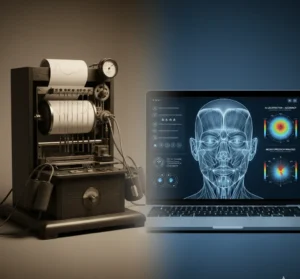
This is exactly where objective verification helps. For years the classic polygraph was the only way to get an unbiased answer. But it has its limits: stress, fear, sedatives — all of these affect the classic lie detector. Modern technology has gone further.
StimulTest is a modern online polygraph and honesty-testing tool that works not on the body's stress responses but on the brain's reaction time to key stimuli. That means the result depends neither on the ability to "keep yourself together" nor on nervousness — the subconscious is almost impossible to fool. You can read more about how StimulTest works on a dedicated page, and the option for private inquiries is described in the section StimulTest for individuals.
Frequently asked questions (FAQ)
How many signs must line up to talk about a real threat?
Family therapists usually consider it a warning signal when 4–5 signs are present at once and appeared within roughly the same time frame (1–3 months). Individual markers can have countless explanations. But a stable pattern rarely arises by chance.
Can a cheater's behavior mimic other problems?
Yes, and that's important to keep in mind. Depression, professional burnout, a midlife crisis, health problems, financial difficulties — all of these can produce similar signs: detachment, irritability, loss of interest in intimacy. That's exactly why self-made conclusions are often wrong in both directions.
Should you check your partner's phone?
From a legal standpoint, in many countries this is a violation of privacy. From a psychological one, even if you find nothing, the act of checking will destroy trust. And if you do find something, you'll be in a position where you can speak about the truth only by admitting you crossed personal boundaries. That's why experts recommend other, ethical methods of finding out the truth.
Can the check be done anonymously?
Yes. A StimulTest check is carried out confidentially, without disclosing the results to third parties. All the details of the procedure and the cost can be clarified in the Services section or through the contact form.
What if the partner refuses to take the check?
That's a personal decision. However, psychologists themselves note: a firm, argued refusal of objective verification in a situation where the relationship is at stake often says more than the test result itself. A healthy person with nothing to hide usually agrees to go through the procedure to ease the tension between partners.
Bottom line: attentiveness is not suspicion
Noticing the signs of a cheating partner does not mean accusing your partner. It means respecting yourself enough not to close your eyes to your own feelings. All 10 points on this list are not "home detective work" but reference points that help you see the relationship honestly — the good and the troubling alike.
If you've read this text and found 4–5 matches in it, you have every right not to live in uncertainty. An honest conversation, work with a psychologist, and — in difficult cases — an objective honesty check are all tools that restore clarity. And clarity, even painful clarity, is always better than years of doubt.
Turn the signs of a cheating partner into a clear, objective answer instead of years of doubt. Certified examiner, full confidentiality, online and in person. Leave a request — we reply within 15 minutes.
Latest articles